prodigious reader, chronic forgetter
4472 stories
·
13 followers

Hate Has to Scatter When Minneapolis Arises

1 Share
Minneapolis, Minnesota. January 23, 2026.

“NUREMBERG IS COMING.” It was not so much the sign itself, black block letters on plain white cardboard, as the contrast between the sign and the man holding it: White, mustached, middle-aged, well-dressed, strolling alone on a downtown Minneapolis street.

“NUREMBERG IS COMING.” This represents not the radical, but the median view of the regular folks in Minneapolis towards our current federal government. This is the average view of the normal middle-aged guy in the office. This helps to explain a lot of things. January 23, for example. When the temperature creeps down towards -20, as it did yesterday, being outside becomes difficult. Glasses fog over into an opaque film. Ice crystals form on men’s beards and the downy, transparent hairs on women’s faces. Warm breath condenses on the scarf covering your mouth and then freezes into an ice sheet that loses its utility. Toes begin freezing the second you step outside and take hours to defrost. Even in thick gloves, hands begin freezing as soon as you withdraw them from your pockets, so that even the act of holding a sign at all requires great commitment. Thighs freeze, knees freeze, eyelids freeze, the tiny spot on your forehead that your hat can’t reach freezes. You yearn to be covered in a full-body suit made of hand warmers. I had 11 hand warmers on me yesterday, stuffed in various pockets and socks, and it was not nearly enough.


Subscribe now


So—good day for a general strike? Good day to march outside for hours on end? Well, the question is relative. Normally, no. But if you are living in the sort of times that cause sober people to believe that Nuremberg is coming, you might make a special exception.

Was there a general strike in Minneapolis yesterday? I have no idea. That’s like asking a man in tiny sailboat in the ocean to name the exact dimensions of a hurricane. Hundreds of businesses shut down thousands of union members stayed out of work and tens of thousands of people joined the day of action against ICE. A number of people in other places remarked that this goes to show that Minnesotans are simply immune to the cold. I think not. Nobody is immune to that cold. That’ll kill you. They just had larger priorities. The famed “Minnesota Nice” attitude was repurposed on many signs into “Minnesota NOICE.” Others carried, simply, flattened packages of ICE NO MOR brand Ice Melt, unadorned with anything else. ICE is a plague, yes, and a deadly one, but the city stood up to declare: We know how to deal with you.

By 9 a.m. Friday, people were trickling off the light rail and tottering their way down a frozen sidewalk to take their place across from the Whipple Building where ICE is headquartered. The protest area there is a blank canvas for expression. Two men yesterday morning had megaphones. One was somberly reciting the text of the Declaration of Independence. The other was screaming “Fuck you, pussy bitch!” at the agents’ SUVs as they drove past. All bases were covered.

An hour later, one stop away at the Minneapolis airport, hundreds and then thousands of people streamed into Terminal 1 for a major protest planned by a coalition of unions. A team of police stood calmly strapping on their riot gear as the terminal filled with protesters bundling up to face the outdoors. We all filed outside and formed an enormous picket line that stretched hundreds of feet, the length of the entire terminal sidewalk. The fact that everyone was draped in heavy coats and had their faces wrapped served to emphasize that this was not a march of some faction. This was everybody. This was the people, chanting “ICE Out!” and calling on Delta and Signature Aviation to cease their cooperation with the deportation machine. Union members in yellow vests served as marshals to keep people in line. A circle of younger students locked arms and held a sit-in in the area where passengers walked in to catch their flights. And something like 100 clergy members, draped in stoles over winter coats, knelt down in the road outside the terminal and were arrested.

Nuremberg is coming, and god is on our side.

By 1:30 that afternoon, thousands and thousands of locals—some who had already been to the airport and back—were making their way to The Commons, a large park in downtown Minneapolis, set amid high-rise towers and the gleaming, angular stadium where the Minnesota Vikings play. People risked frostbite to hold up signs and upside-down American flags attached to hockey sticks. Somewhere in the middle of the park was a stage, and a speaker, but due to the gentle hills in the park, neither I nor at least half of the people there could see any of that.

It didn’t matter. The importance of all of those people in that park on that frigid day was not the speeches nor the signs nor even the enormous march they were about to make through the urban canyons of Minneapolis. Instead, I think, it was their own manifestation of a way of being that is different from the fear, division, hostility, and revenge that ICE embodies. That park was instead a place of love, of unity, of openness, of commonality. People wandered around passing out free hand warmers and snacks. People made way for one another, politely. People there were, collectively, willing to inconvenience themselves, to undertake some level of sacrifice, in order to help their neighbors who were in even greater need. Yes, I will take off work, and I will close my business, and I will follow around federal agents in my car, and I will freeze my ass off in to protest on the coldest day of the year, because the outrages being perpetrated against my neighbors is important enough to warrant that. That is what the day represented. As much as we dream of general strikes as the magical solution to our biggest problems, there will always be a morning after the general strike, and the problems will still be there. What will eventually grind those problems down is the sustained determination of the people to sacrifice for one another.

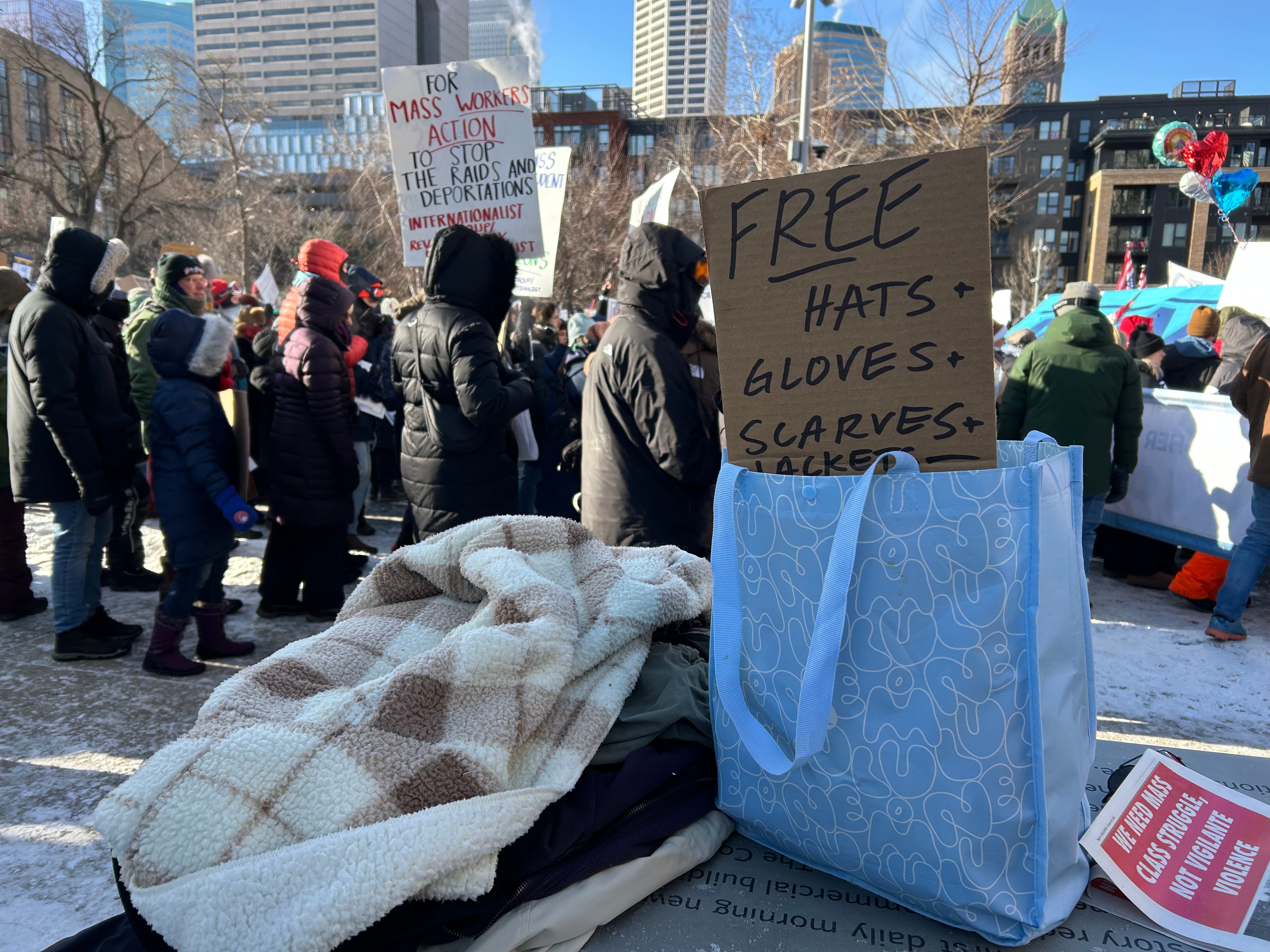
In the middle of the park, amid knots of protesters, was a table piled with clothes. A handwritten sign read, “Free Hats + Gloves + Scarves + Jackets.” You could have wandered into that park naked and found yourself an entire winter outfit, along with hand warmers and hot chocolate, before you died of exposure. I don’t know who brought all that stuff out there. People brought it, for other people. That’s what I saw in Minneapolis. The extended hand of niceness, and the way that it can form a protective fist, when it needs to.
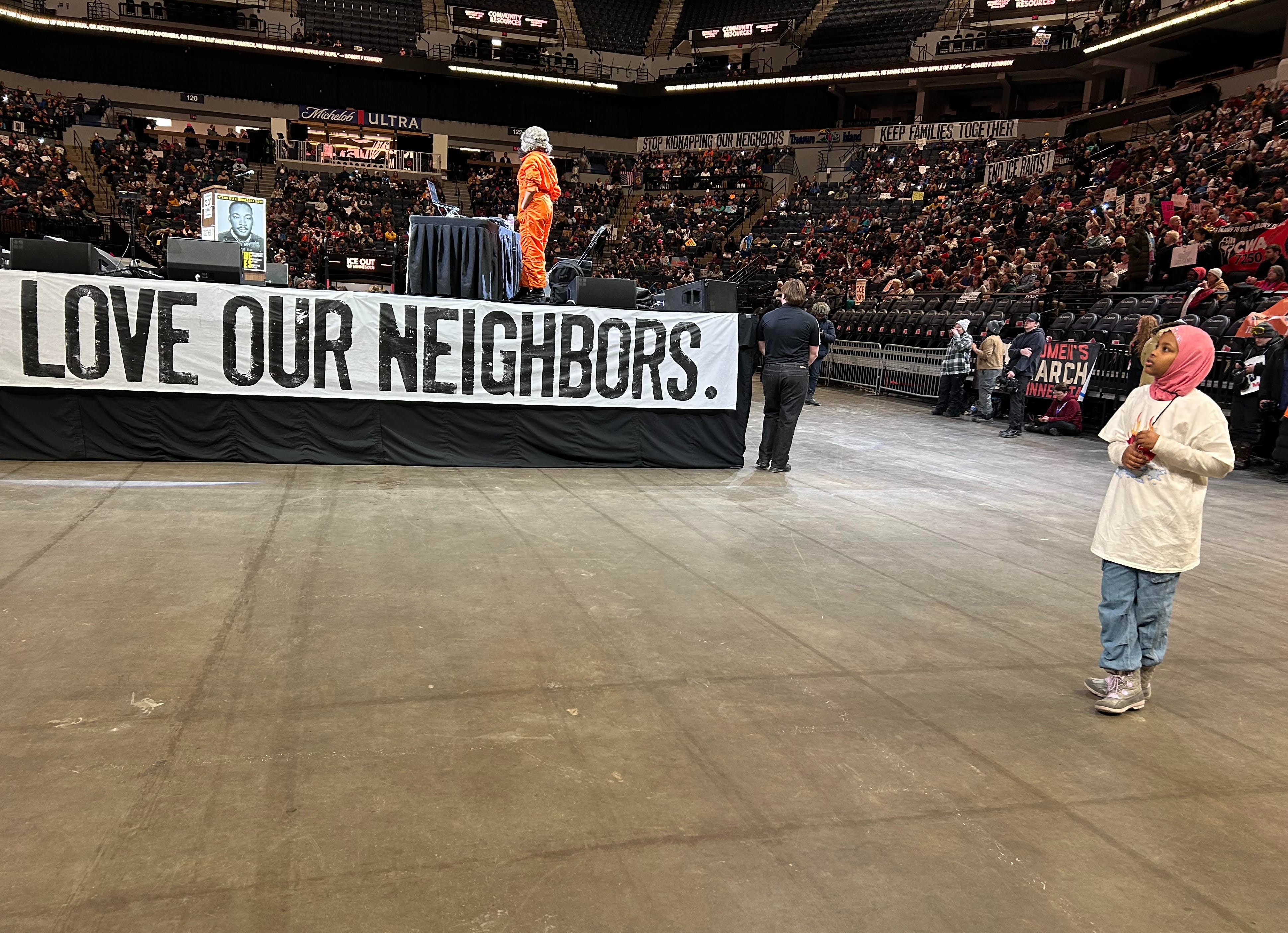
The march was big. It was officially announced as 50,000 people. Privately, some organizers said it was more like 100,000. I can only tell you it was big. The march ended at the Target Center, the downtown basketball arena, which organizers had secured at the last minute, when it became clear just how brutal the weather was going to be that day. A great DJ in a head-to-toe orange snow suit and fur hat mixed Kendrick Lamar with “Dancing Queen” as people filed in slowly, eventually filling the stadium’s entire lower level. It was kind of neat to see “ICE OUT OF MINNESOTA” displayed as the message on the huge overhead screen at an NBA stadium, in the place that normally shows Anthony Edwards dunk highlights. In the video crawl around the arena normally reserved for local ads and announcements, there was a rotating series of handpicked, appropriate slogans: “‘Resistance to tyranny is service to God.’ - James Madison.”

There was a benediction by a Native American professor, and music, and a speech by an imam, and another by a Christian pastor, and more by union leaders. It was, I realized, a tableau of the city of Minneapolis itself, and of the ethos that the entire day was putting forward. It was a suggestion of a way that America could be, a way better than what we are doing now. Here they say “Minnesota nice” and in New Orleans they say “Be nice or leave!” and in every other city they say their own variety of this, and all of it is just a way of saying that we can be open rather than closed, that we can welcome neighbors rather than despising them, and that we can, if necessary, fight to be nice just as hard as others can fight to be mean.

“To our migrant community,” the imam said, “You are not garbage. You are gorgeous. You are not foreign. You are familiar. You are not far away. You are our future.”

All types of people live up here, in this frozen city. Minnesota, for some reason! The most vibrant Somali community in America. One of the richest traditions of organized labor in America. The cradle of our generation’s racial justice movement. All here. To visit here is to be impressed by how many people in this city are willing to rise up to protect it from those who see all of its characteristics as a threat, rather than as a blessing.

This is a city full of socialists. This was a general strike organized with clear-eyed political and economic goals. But, I must admit, it was the religious man, the preacher—B. Charvez Russell, of Minneapolis’s Greater Friendship Missionary Baptist Church—that summed up the feeling of January 23 most effectively.

“This is not a call to violence,” he thundered from the podium in the middle of that arena. “But it is a declaration that when god moves, there is no room for the enemies.”

“When god rises, hate has to scatter.”

“When god rises, fear has to scatter.”

“Lies have to scatter!”

“Injustice has to scatter!”

“Division has to scatter!”

“Oppression has to scatter!” “

“Families being intimidated has to scatter!”

“Children being traumatized has to scatter!”

“Workers and labor being labeled as enemies and threats, all of those have to scatter!

“Renaming an invasion as protection has to scatter—when god arises!”

Leave a comment


Also

  • Previously: Cold City, Hot Heart.

  • Find out how to support the people of Minnesota here.

  • It is your paid subscriptions and donations that enable me to do this reporting. If you’d like to support How Things Work in 2026, take a quick second to become a paid subscriber today. Thank you all for reading.


Subscribe now

Donate to our reporting fund.

Read the whole story
rocketo
2 hours ago
reply
seattle, wa
Share this story
Delete

the past three weeks in a row, partner has gone to chipotle and been served by the same employee…

1 Share

audhdspacewizard:

json-derulo:

json-derulo:

json-derulo:

json-derulo:

json-derulo:

the past three weeks in a row, partner has gone to chipotle and been served by the same employee who, in bold defiance of the testimony of his own eyes and ears, ardently refuses to believe carnitas exist

partner: “Hi, could I please have a bowl with white rice, black beans, and carnitas?”

employee (completely blank expression): “No.”

partner (autistic) (socialscript.exe encountered an unhandled exception) : “…Uh. Um. Sorry?”

employee: “We don’t have that.”

partner (wondering if perhaps he put too much of the authentic accent on the word and that’s what’s throwing the guy): “You don’t have…(pronouncing it whiter) carnitas?”

employee (face still unreadable): “No.”

partner (looking at the near-full hotel pan of perfectly normal carnitas in its usual place on the other side of the glass) (noticing this employee looks unfamiliar) (maybe he’s a new guy that just started five minutes ago with no training?) : “The…pork?” (pointing at it)

employee: “We don’t have pork.”

partner (beginning to wonder if he’s the one that’s losing it) (desperately looks to the menu on the wall behind the employee) (the menu lists carnitas as a protein option) (the word “carnitas” is not crossed out or taped over or otherwise adulterated) (carnitas have been on the standard menu since at least 2016) : “Okay. Um. Are you…sure?”

other employee working the toppings part of the line (familiar) (have seen her before) (she has cool earrings): *gives the new guy a strange look, nudges him aside, and scoops the carnitas onto partner’s bowl before continuing with the other toppings*

Repeat conversation again the next week. And the next. Same guy. If it’s a bit, no one is laughing, including the employee.

theories I’ve considered:

- the employee keeps very strictly kosher/halal/vegan and refuses to handle pork (understandable, I respect that, but if you’re gonna work at a place that serves pork I do kinda feel like when someone orders it you’ve just gotta tap in a coworker to do it for you)

- someone did something gross to the carnitas and the employee is trying to warn people not to order it (??? throw it out then? also, three weeks in a row???)

- the employee is a space alien who views humans as so similar to pigs that for us to eat them is tantamount to cannibalism

- the employee is the lead in a kdrama romance about a pampered, clueless chaebol heir who is sent by his father to work in the company’s restaurants for a year in order to prove he’s ready to take over as CEO. he’s dumb as rocks but they can’t fire him or even correct him that harshly due to the power gradient. partner is just a minor reoccurring character, and the interaction is kept the same from week to week to highlight the development of the relationship between the employee and his love interest with the cool earrings (even if the restaurant is literally a fully-branded Chipotle, that’s somehow still not enough product placement for me to believe this is a real kdrama)

After reviewing again with partner, evidently I forgot a detail that set this week’s carnitas denial dance apart from the others.

partner (well aware of what he’s getting into with this guy now): “Hi. Could I please have a bowl with white rice, black beans, and pork?”

employee: “We don’t have pork.”

partner (demonstrating a level of patience only a public school teacher could have): *points at the pan of carnitas* “Could I please just have some of that?”

employee (after several slow, confused blinks): *points at the same pan* “That’s steak.”

partner (looking at the hotel pan they’re both pointing at) (it is filled with shredded meat of a pale beige color) (at the other end of the row of pans is another pan containing dark brown, lightly charred meat chopped into small pieces): “Okay.” *deciding he’s willing to play in this fantasy space if it gets the job done, he points at the first pan again* Then could I please have the steak?”

employee: *starts to reach for the pan at the other end containing the actual steak*

partner: “Oh—no, sorry, this one please?” *points at the first pan containing the carnitas*

employee: *blinks, then just walks away and starts helping the next customer in line, leaving partner’s bowl unfinished*

other employee with cool earrings: *rolls her eyes at new employee, takes partner’s bowl, and fills it with carnitas herself*

new theories:

- the employee is a bridge troll who will only dole out his delectable carnitas to those who prove themselves worthy by correctly answering his riddles three

- the employee is stoned out of his mind at all times on a specific strain of weed that totally erases the concept of pork from his memory and awareness

My dealer: got some straight gas 🔥😛 this strain is called “pork eraser” 😳 you’ll be zonked out of your gourd 💯

Me: yeah whatever. I don’t feel shit.

5 minutes later: dude I swear I just saw some steak in the hotel pan

My buddy Phillip pacing: Chipotle upper management is lying to us

Read the whole story
rocketo
2 hours ago
reply
seattle, wa
Share this story
Delete

Protesters Blockade ICE Headquarters in Fort Snelling, Minnesota : Report from an Action during the General Strike in the Twin Cities

1 Share

On January 23, thousands of people went on strike in the Twin Cities to oppose the ongoing campaign of kidnapping and murder that federal mercenaries have perpetrated over the past two months in service to Donald Trump’s program of ethnic cleansing. Over 1000 businesses shut down—some enthusiastically, others involuntarily. At the same time, a smaller number of demonstrators set out to prevent federal mercenaries associated with Immigration and Customs Enforcement from carrying out the abductions they had planned for the day.

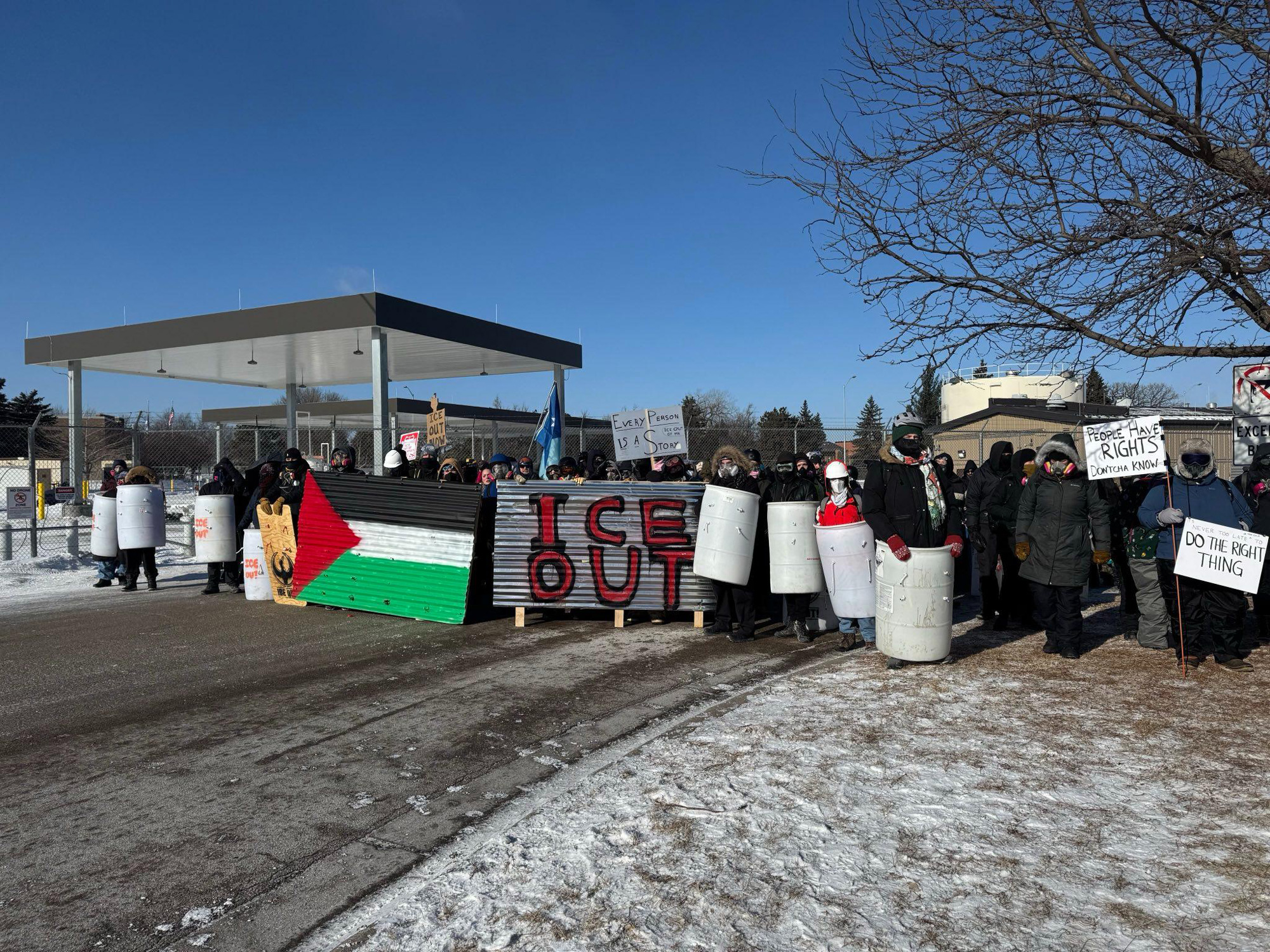
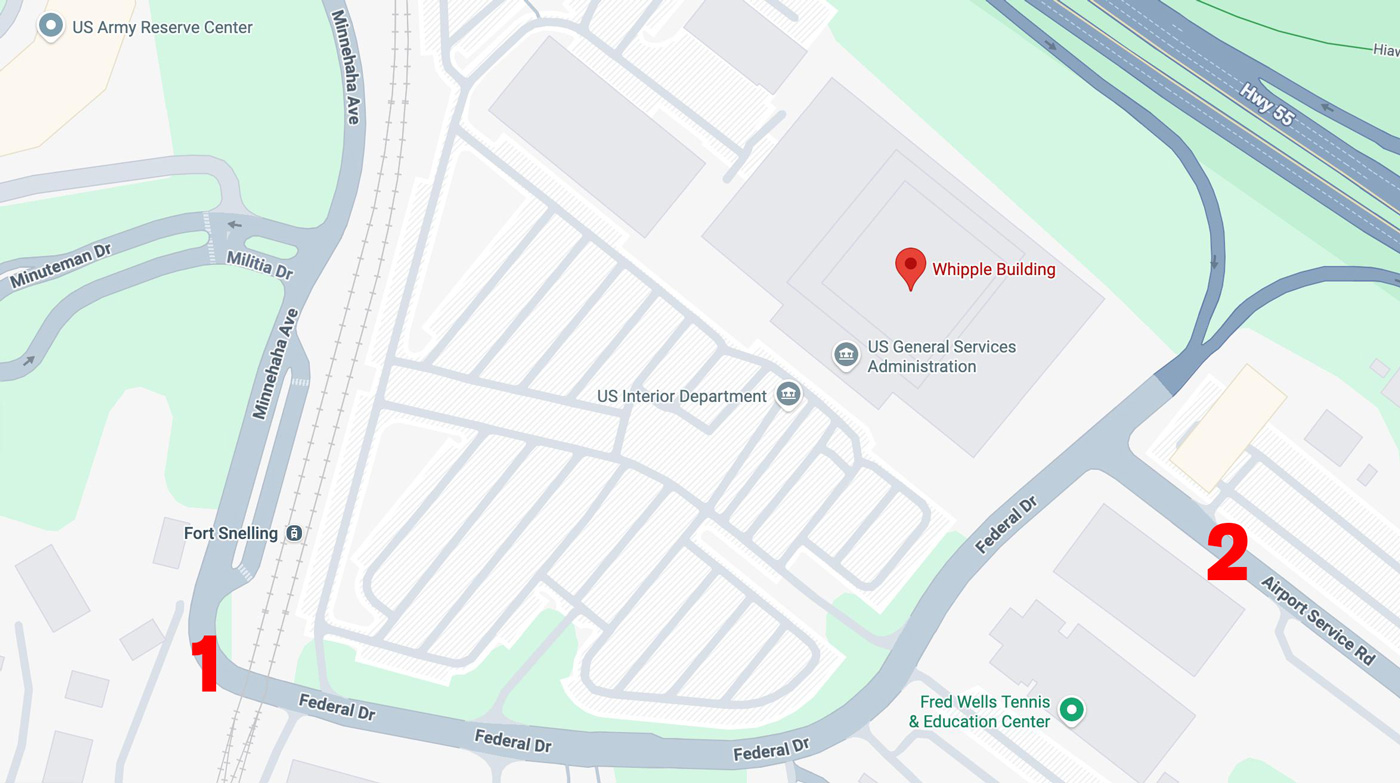
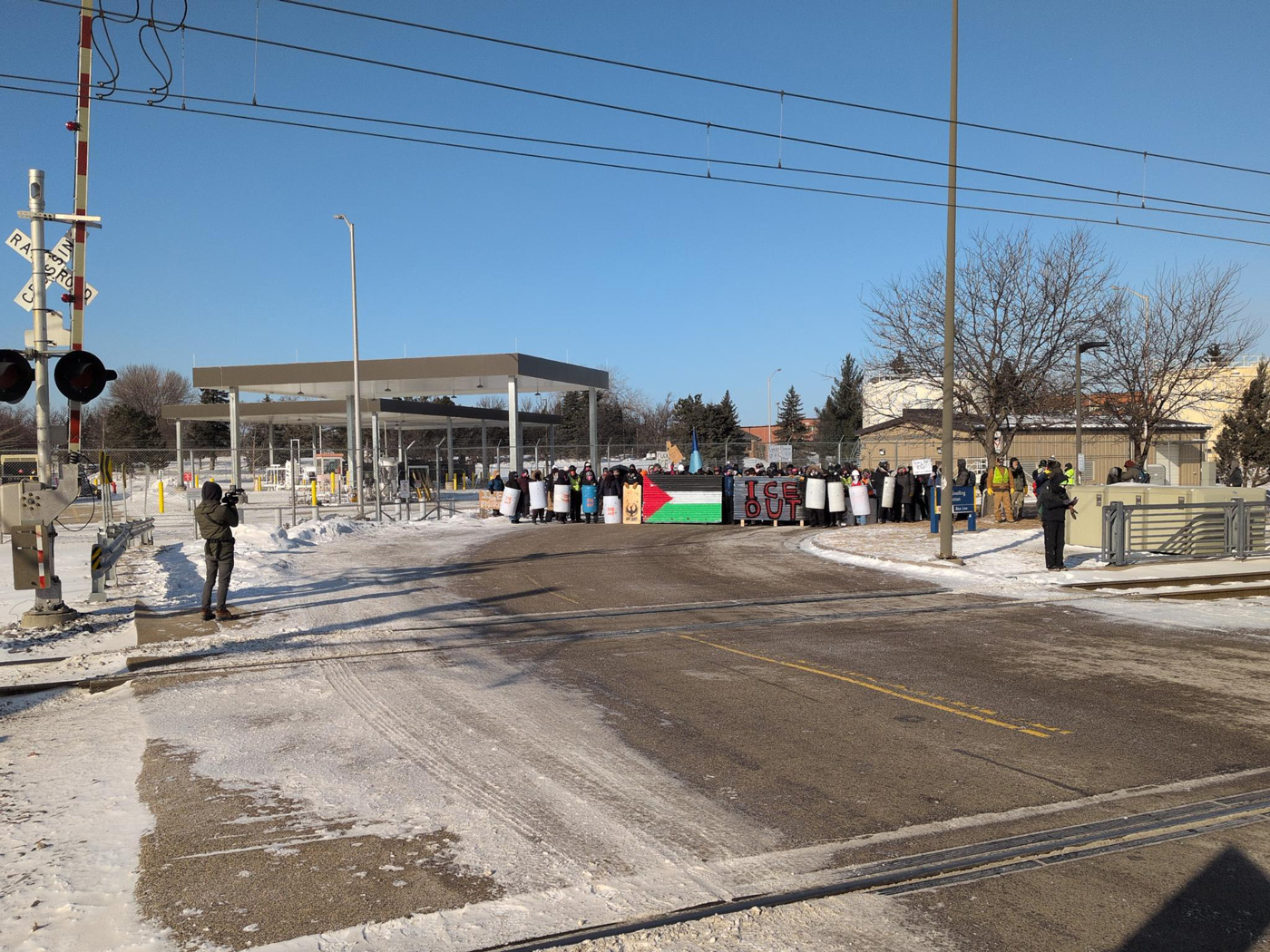
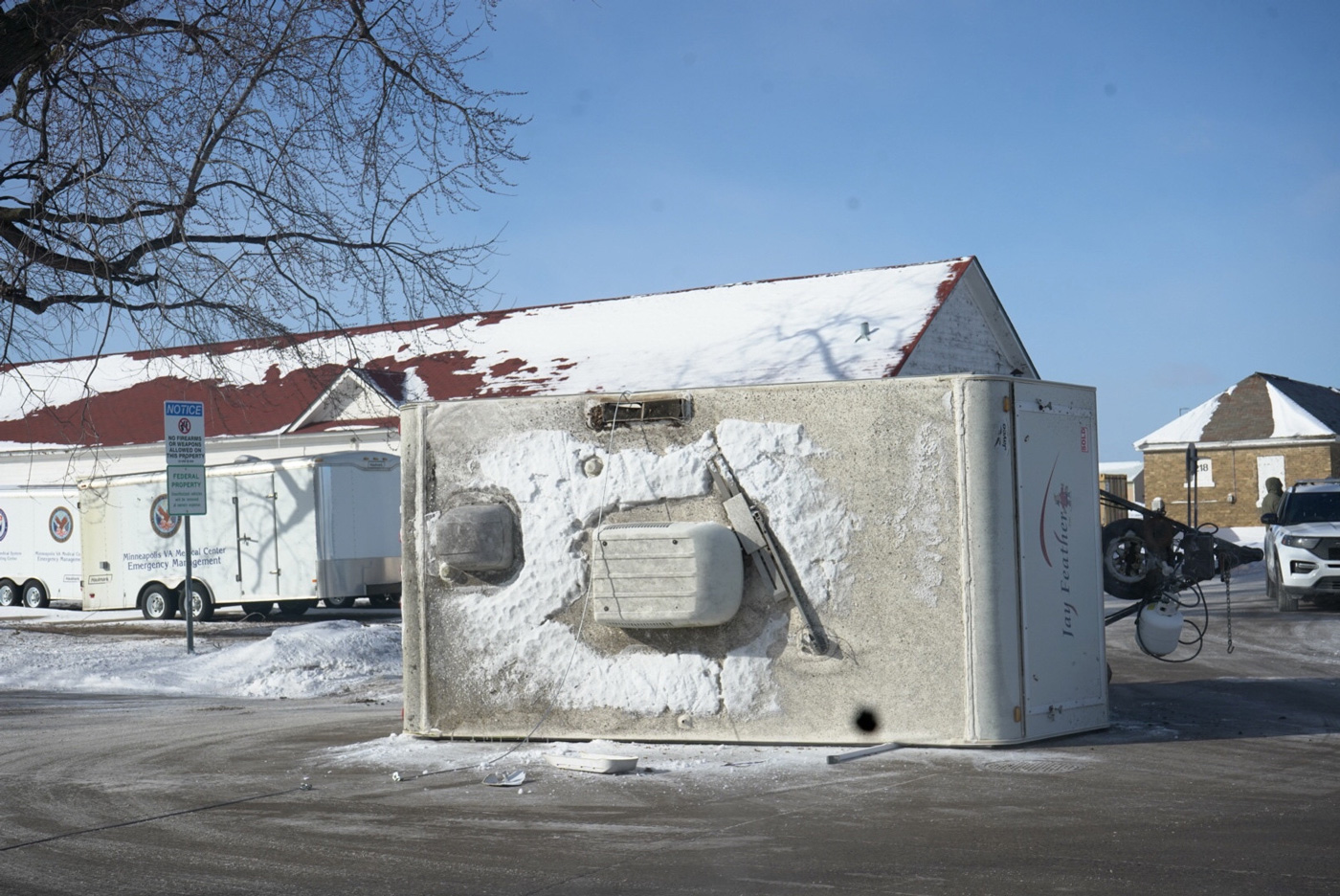
Early on the morning of January 23, in sub-zero conditions, roughly 75 demonstrators with shields and reinforced banners blocked the intersection of Minnehaha and Federal Drive, immediately adjacent to the Bishop Henry Whipple building, which ICE has been using as their base of operations in the Twin Cities. At the same time, someone left an RV trailer blocking Airport Service Road near the north end of Federal Drive (see map). This completely blocked two of the three means of ingress and egress to and from the Whipple building. Presumably, the blockade was intended to box ICE in at the north end of Federal Drive, blocking off every point of egress, but as it played out, they still had access to one exit.

The RV trailer blocking Airport Service Road remained in place for about half an hour. The demonstrators blocked the intersection of Minnehaha and Federal Drive for two and a half hours.

There was no sign of ICE or BorTac (the Border Patrol Tactical Unit, members of which have beaten and tear gassed protesters at prior actions by the Whipple building) during the entire two and a half hours. The ICE motor pool appeared almost totally full during the action, suggesting that they weren’t staging from any secondary location. It is possible that this action effectively trapped a large number of ICE agents at their headquarters.

Eventually, after the trailer had been removed, Hennepin sheriffs threatened to attack the demonstrators with chemical weapons. The participants in the blockade dispersed five minutes later, before chemical weapons were deployed. Two arrests were reported in the area, apparently not in connection with the blockade at the intersection of Minnehaha and Federal Drive.

The role of the sheriffs is noteworthy. From Chicago to the Twin Cities, local and state police that supposedly answer to Democrat politicians have played a fundamental role in violently suppressing protests in order to enable ICE to continue kidnapping and brutalizing people. Any movement against ICE will have to contend with this bipartisanship.

Two weeks ago, on January 8, protesters blocked the gates of the Whipple building for one hour in response to the murder of Renee Nicole Good by federal agent Jonathan Ross. Today’s attempt raises the bar. It is inspiring that thousands of people participated in today’s general strike. The blockade at the Whipple building shows that some are prepared to go further, taking bold and creative action to directly impact what ICE can and cannot do.

In the following anonymously submitted account, participants describe what they witnessed during the blockade and offer some context for their experiences resisting the ICE occupation.

Location 1: demonstrators blocked the intersection of Minnehaha and Federal Drive. Location 2: an abandoned RV trailer blocked Airport Service Road.


Three Forms of Conflict

“It’s been the longest year of my life.” You can hear this refrain throughout the Twin Cities—and it’s only January. More than fifty days of occupation by federal forces has weighed upon the resolve and well-being of resisters and occupiers alike.

The federal site at Fort Snelling, where the Whipple Building is located, is known for having served as a concentration camp imprisoning the Dakota people in the 1860s. This legacy continues today with the use of the site as the home base for thousands of masked kidnappers. The 3000 federal agents involved in this operation outnumber the ten largest police forces in the Twin Cities combined.

The first abductions began as a trickle and built to a stream, then a flood like the mighty Mississippi. The most henious and evil acts are burned into our brains, reminiscent of the sort of attacks the Israeli army has carried out in the West Bank: ambushes on schools and hospitals, masked invaders using terrified children as hostages, shootings, even a public execution. The piercing tones of 3D-printed whistles are scorched onto our eardrums like tinnitus. Yet the violence of ICE has fueled a shared rage that many people never knew they were capable of. Many new resisters are waking up to this reality for the first time. Others have experienced wave after wave of struggle in the Twin Cities, which have prepared many of us for this moment.

Fascism is not on the way. It is here.

In response, people prepared to go on the offensive on the day of the general strike. This offensive involved three different struggles, none any less important than the others.


Confronting the Self

Like many on the global stage, we find ourselves in unfamiliar waters. The old rules have been thrown out the window. In the streets, ICE acts more like Nazis than like cops. This is especially apparent to those of us with experience in anti-fascist organizing. Their terroristic tactics combine a mixture of brutality and cowardice; their unpredictable nature has strained even seasoned veterans.

This is the first form of conflict we must deal with: struggle against self.

Uncertainty breeds fear. We have use threat modeling to identify what the risks are and which ones we are prepared to run. Movement tactics like positioning sharpshooters on roofs, using security checkpoints, and sending security teams to escort people through dangerous areas have become common once again, as they were in the height of the 2020 uprisings. This is the case even for large meetings now. We study and practice these skills over and over, doing our best to address our fears while seeking to assuage anguish over those who have already been disappeared.

Care must be taken when deliberating too, as frustration can easily flare up over minor or inconsequential issues. Recognizing and regulating our own emotional states is key to avoiding the tendency to act on fear. Group visualization techniques present an opportunity to imagine possible outcomes and prepare our responses in advance.

The crime against humanity that we call genocide doesn’t just affect those who are abducted or killed. Those who remain must carry its weight. In the week leading up to the general strike, we wrestled with all of these things. Nonetheless, we pressed on.

Demonstrators with shields and reinforced banners blocking the intersection of Minnehaha and Federal Drive.


Confronting the Natural World

There is a difference between ordinary cold and bitter cold. It’s difficult to describe if you haven’t experienced it. In the bitter cold, there is almost a serene stillness to the air, a seeming tranquility daring you to underestimate its lethality. Literal arctic chills can spread through our state. A week ahead of the general strike, it became clear that it was going to be a very cold day.

This second form of conflict is just as dangerous as any human violence: struggle against nature.

I’ve seen one exposure death before. The glassy black skin on their body isn’t a vision I will ever forget. ICE have recently been taking a page out of the Saskatoon Police force’s “Starlight Tours” and dropping off arrestees in the middle of the night in remote areas, intentionally using weather exposure as a weapon of torture. On the morning of the general strike, temperature adjusted for wind chill was about -30 degrees Fahrenheit (-35 Celsius). This can cause uncovered skin to develop frostbite within twenty minutes, a challenge that requires careful planning and specialized clothing to address.

In the modern surveillance state, one must also take care to avoid being identified by one’s specialized winter clothing. Despite organized warming stations, several volunteers from out of town underestimated the risks and were injured from exposure alone. There surely would have been two or three times as many participants in the blockade were it not so bitter outside.

As in the fight against the Dakota Access Pipeline, there were concerns that state or federal forces might use water as a weapon. At one point, a scout identifed and radioed out what appeared to be preparations to employ a water cannon. In this weather, with no nearby facilities to warm up in, such a weapon could inflict permanent harm. Similarly, water to flush chemical weapons can pose a risk in these temperatures.

Tensions were high, but with extra jackets and handwarmers, we were able to hold the line.

The RV trailor abandoned in the middle of Airport Service Road.


Confronting the Occupiers

Being across the highway from the rest of the city, the Whipple Building is difficult to reach on foot and well-protected from pedestrians. Two days before the action, our adversaries added additional layers of fencing to create chokepoints and opportunites to trap demonstrators. They put up jersey barriers and fences on either side of Federal Drive, all the way down, separating the street from the sidewalk, blocking off every driveway—creating a sort of tunnel. Understood solely as a defensive tactic, this made sense in a mindset obsessed with violence. Though it also made it easier to blockade the route, as their fortifications left them only three exit points.

Four different groups prepared to take action to blockade those points. This is the final form of conflict we must confront: struggle against the occupiers.

One group walked in from the city and train station, carrying shields, steel banners, and other items. Their goal was to block the primary access point, diverting traffic. Arriving early, I saw items being distributed as people huddled for warmth in the exposed parking lot. At first, the numbers looked concerningly small. The group pressed forward to the chokepoint, occupying the area before the tunnel. The demonstrators could not get in, but the mercenaries would not get out.

Perhaps the latter had not prepared for this mutual achievement of goals. In any case, the only forces that these demonstrators encountered were three squad cars from the Hennepin County Sheriff’s Department. This is unusual. We have not previously seen sheriffs at the Whipple building; typically, this unincorporated land has only been used by federal agents. The federal forces remained holed up in the building, afraid to step into the cold. The demonstrators chanted and taunted them to draw their ire; still, federal agents did not show themselves. They took no offensive action of any kind.

Perhaps the federal agents, too, are exhausted from their long campaign of contemptible violence. Perhaps they were stretched thin from preparing to deal with the general strike. Perhaps they were more afraid of nature than the demonstrators were. Or perhaps they were obeying strict orders from their commanding officers not to engage, for reasons we can only speculate about.

In any case, it was unusual that they did not attack the blockade. The participants successfully retained all the equipment and supplies they had brought out to the action, which is unusual for such confrontations.

While that group held the city entrance, other groups took coordinated action elsewhere. One group towed blockading material into the highway entrance. The first convoy in this group apparently deployed an RV trailer and exited the area. A second convoy in the group left the area without deploying any sort of barricade, as sheriffs swarmed the trailer at the last second. The single RV trailer that remained nonetheless obstructed egress for nearly half an hour.

Finally, two other groups provided support and a human blockade on a side road. Unfortunately, sheriffs carried out two arrests there during an agressive push towards the fortified “tunnel.” Reportedly, snowballs were thrown at federal vehicles, shattering one window. Ice versus ICE.

After tear gas was deployed, many of the people in this area began coming over to the primary blockade, reinforcing the numbers at the intersection of Minnehaha and Federal Drive.

As the hard barricades were cleared and others poured in, the demonstrators took a moment to consider the situation. They had already achieved their objectives for the day, coordinating between several groups and seizing the opportunity of the general strike as a whole to grind things to a halt at the Whipple building. Given the opportunity to leave without sustaining losses, they chose to take it, leaving before weapons were deployed. They marched back as a single unit in a tactical retreat, still protected by shields and steel banners, chanting “Minnesota’s got the ICE melt!”

For two and a half hours, demonstrators had blocked all but one of the routes in and out of the Whipple building.


Today’s action only strengthens our resolve. Now we have more experience coordinating with one another and more knowledge of the terrain. The fact that federal forces did not show themselves reinforces the notion that they are not prepared to defend themselves in large confrontations—or at least, that they consider it preferable to avoid doing so. Their continued reliance on state police and sheriffs poses complicated strategic questions for us, but it could also create complications for them in the future.

As local comrades recently stated in regards to Donald Trump’s threat to invoke the Insurrection Act:

“We must continue to organize communities, patrol our streets and build rapid response teams, push for workplace stoppages, and grind them down every step of the way. We must exact a price for every footprint they leave in our snow. When we have the opportunity, we will drive them from our streets and tear down their concentration camp. ICE will melt when the heat turns up.”

Forever yours in struggle.

Read the whole story
rocketo
21 hours ago
reply
seattle, wa
Share this story
Delete

Gavin Newsom Has Nothing To Offer

1 Comment

In California, a proposed law drafted by organized labor would impose a one-time tax on all the state's billionaires, equal to some portion of their total worth. Those whose net worth exceeds $1.1 billion would pay around five percent; five percent of $1.1 billion is $55 million, which would leave those Californians with a mere $1.045 billion in personal net worth. Those whose net worths fall between $1 billion and $1.1 billion would pay a lesser percentage of their wealth.

The proposal is called the "2026 Billionaire Tax Act," and while it could potentially generate some gigantic sum of money for the state of California, anyone capable of some basic math, and of even vaguely conceiving of how much money a billion dollars is, can see that it would not meaningfully deplete even those paupers whose personal net worth sits at a mere $1 billion. Those affected by the tax would be able to spread their payment over five years, beginning in 2027, in case any of these individuals whose personal wealth exceeds that of some island nations find themselves illiquid at the moment.

Among the proposal's opponents—including, of course, many billionaires, who reportedly have already begun planning their exits from the state in anticipation of a tax that may very well never come to pass—is California governor Gavin Newsom, who has boasted of working against its passage behind the scenes, and has promised to defeat the initiative should it ever reach his desk, where he could bring its passage into law to an end simply by refusing to sign it. (He can be bypassed in theory by putting the proposal to voters as a direct ballot initiative.) The Democrat, widely understood to have his sights set on the party's 2028 presidential nomination, has fought off taxes on extreme wealth at least twice before in his term, despite their strong popularity among residents of the state.


Read the whole story
rocketo
2 days ago
reply
“Lacking any systemic critique of America's broken politics, unwilling or ideologically incapable of situating Trump within America's much larger problems of wealth concentration and institutional rot, he gives material protection to an unaccountable, malevolent class of hyper-rich parasites with one hand, and makes an empty, theatrical, cornily homophobic gesture at attacking those same predators with the other.”
seattle, wa
Share this story
Delete

hater-of-terfs:closet-keys:phantomrose96:Day 286 of quarantine I have...

2 Shares

hater-of-terfs:

closet-keys:

phantomrose96:

Day 286 of quarantine I have discovered www.webstaurantstore.com

It is, I BELIEVE, a website intended to be used by restaurants for bulk ordering food and utensils. And this is bringing me such unbounded delight scrolling through and recognizing that I, a single individual, ALSO can order ridiculous obscene enormous offensive-to-all-common-sensibilities shipments of BULK FOOD, to my LITTLE LITTLE APARTMENT, for PENNIES on the dollar. I have this god given power to flood my entire living space with bulk grains and it is one single button click away from my reality.

30 POUNDS of chocolate for $100. 20 POUNDS of peas for $13?? $13!!!! I will wake up every single morning from now on knowing that a box of donuts and a sack of dried split peas heavy enough to bodily injure someone both carry equal monetary weight. 25 POUNDS OF ONION POWDER for $50. Do you understand the enormity? the accessibility? the potential here? With the single click of the button I can put myself in a position of bequeathing more than a humanly comprehensible amount of onion powder in my will. AND IT WOULD ONLY COST ME $50 TO MAKE THIS A REALITY.

But what gets me

What truly gets me

image

is the 50 POUND BAG OF RICE 

FOR LESS THAN $20

Do you know how much that kills me? How much I’m losing my mind? that I can order MYSELF WORTH OF RICE for something to the tune of $50? I can OUT-RANK MYSELF WITH RICE, DEMOCRATICALLY OVERRULE MYSELF WITH RICE, IN MY OWN APARTMENT for the fucking PENNIES that is $50

I’m so sorry for the normal person I’ll be after quarantine because the cabin-fever version of me I’m inhabiting right now is perhaps just uninhibited enough to follow through on this dream I’ve just discovered of out-ricing myself.

real talk though, if you had a large number of people in your community who wanted a particular food item and couldn’t afford it (for instance if you’re in a food desert and need produce or if you’re a part of a large disabled and/or overworked community who all need prepared frozen food), you could pool funds and get an order from a supply store like this.

it requires organizing for finance management, ordering, transport, and distribution, but if you build a stable mutual aid network, it’s genuinely within the realm of possibility.

This idea is called a buyers club (or buying club, buying coop, etc) and it’s a great time-tested method of mutual aid. And there are guides and tools for starting your own at managemy.coop

Read the whole story
angelchrys
3 days ago
reply
Overland Park, KS
rocketo
3 days ago
reply
seattle, wa
Share this story
Delete

Being “Peaceful” and “Law-Abiding” Will Not Stop Authoritarianism : A Message from Germany

1 Comment

In the following analysis, anarchists from Germany explore how events from German history should inform those who are resisting the consolidation of authoritarian power in the United States today.


Greetings from Germany. Even though we have seen many videos of police murdering people, it still enrages us every time. After the murder of Renee Good, we reflected on what we could do to support the opposition to Donald Trump.

We have decided to share our experiences from Germany and German history in hopes that this will help people in the United States to defend themselves against attempts to control, pacify, and divide. One of the central elements of the Nazi rise to power in Germany was the fact that the leaders of the Social Democrat parties participated in the crackdowns suppressing a series of uprisings.

In addition, we want to call on everyone else in the territory claimed by Germany to support the resistance in the United States with all resources available. If Trump is stopped, we may also have the chance to defeat authoritarianism here.

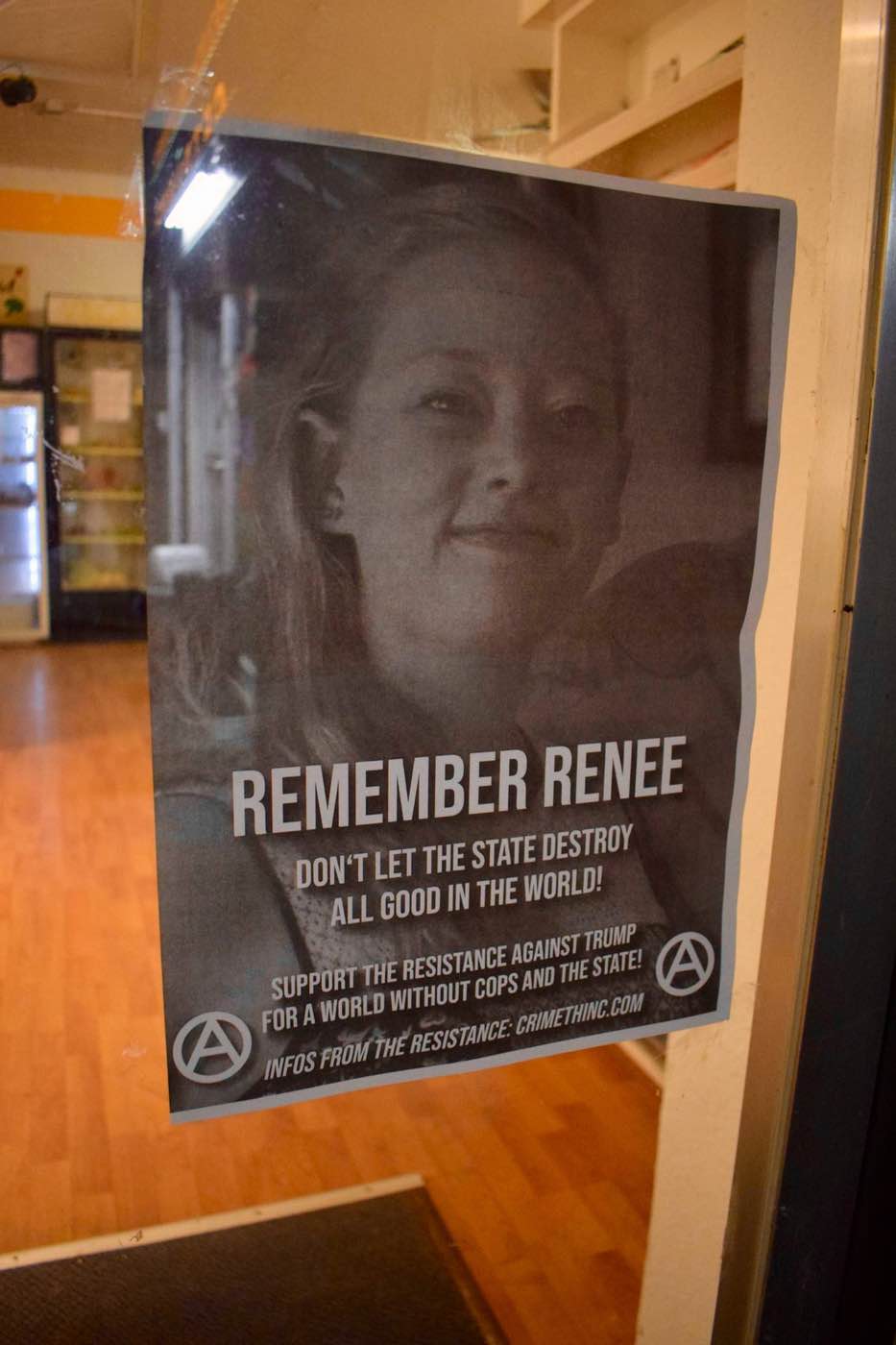
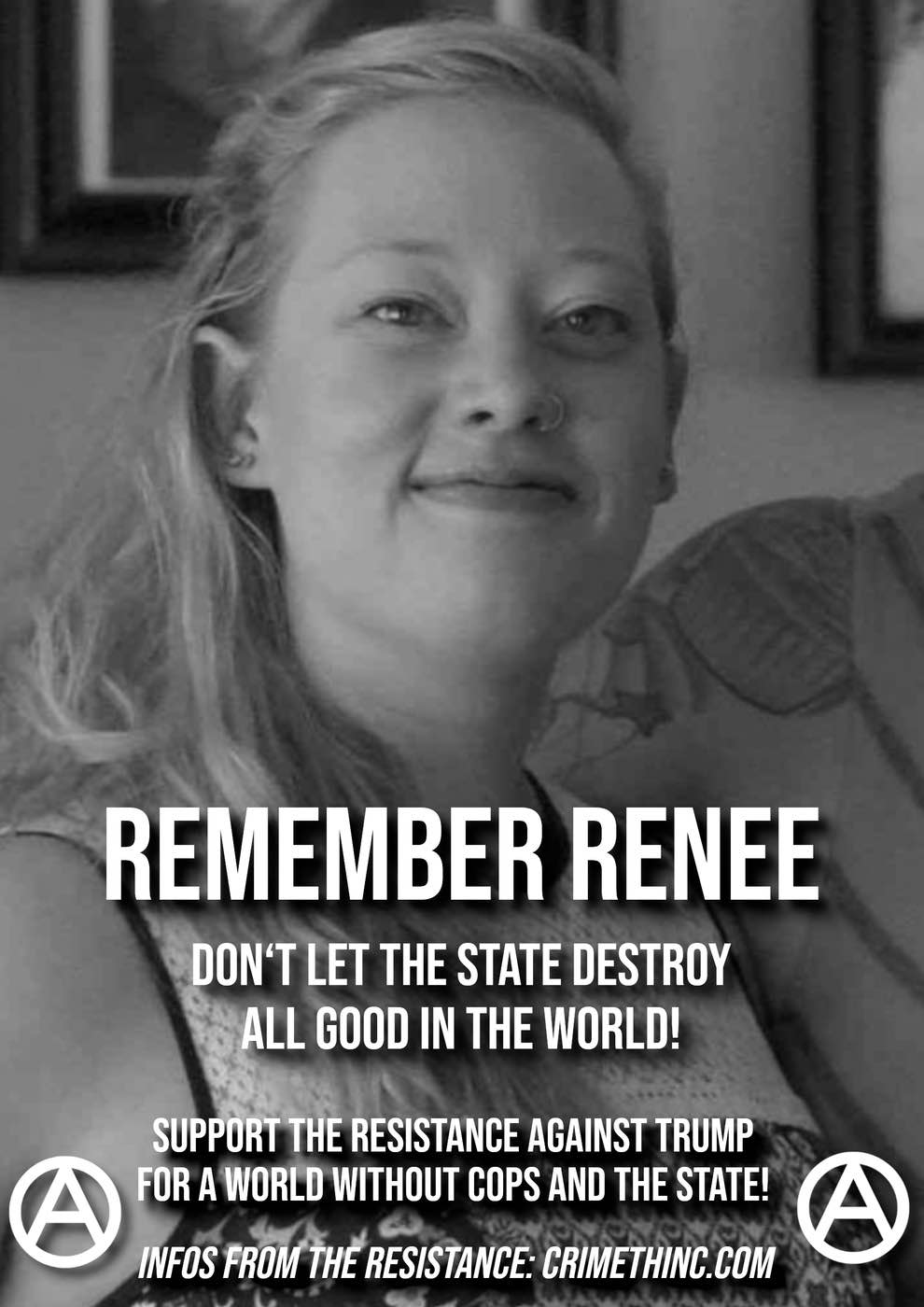
“Remember Renee—Don’t let the state destroy all good in the world.” A poster in remembrance of Renee Good seen somewhere in Germany. You can download the design in Appendix I, below.


Being “Peaceful” and “Law-Abiding” Will Not Stop Authoritarianism

Before the Nazis took power, Germany had one of the largest workers’ movements in the entire world. This movement was dominated by the Social Democratic Party (SPD). From 1919 on, the second strongest power was the Communist Party (KPD). Consequently, the German workers’ movement has always been strongly focused on elections as a means of acquiring state power.

Despite this focus on the parliamentary route, the rank and file of the German workers’ movement has repeatedly been compelled to resort to other means. In 1918, a revolution organized by workers and soldiers overthrew the emperor and created the first German republic, creating a government led by the Social Democrats.

Shortly afterwards, right-wing militias and elements of the official military staged a coup against the government in Berlin. The government fled.

In response, a nationwide general strike took place with millions taking part. In the Ruhr area, workers went a step further: tens of thousands armed themselves and drove the police and military out of the region, establishing workers’ councils. In the cities where the anarcho-syndicalists were strong, people also expropriated companies. The workers were so powerful and the regular German military so weak that the most important industrial region of Germany, a region with millions of inhabitants, was liberated from the control of the state.

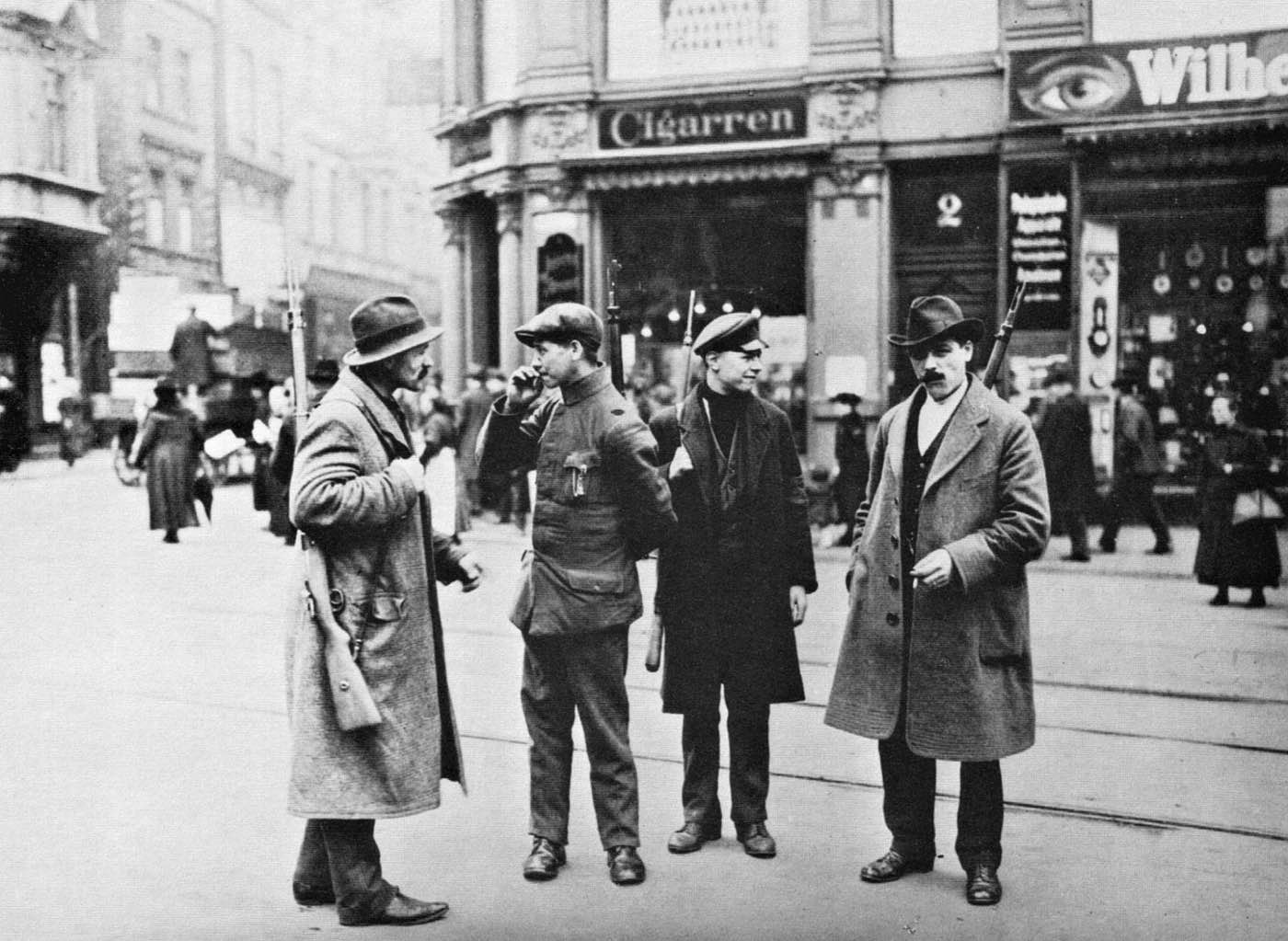
An anti-fascist workers’ militia in the town of Dortmund during the Ruhr Uprising.

After the strikes, direct actions, and militant struggle stopped the coup, the same social democrats that the workers had helped to victory quelled the uprising. To accomplish this, they made use of some of the right-wing militias that had previously been involved in the coup. They were able to do this because half of the workers withdrew from action after the “legitimate” government was back in power.

To crush the Ruhr uprising, state forces murdered over a thousand workers, including many of the most militant fighters of the workers’ movement. Consequently, they were not able to participate in the resistance to the growing fascist movement in the following decade.

Some 93 years after the suppression of the Ruhr uprising, it was the same party, the SPD, that deployed over 31,000 cops to the G20 summit in Hamburg to defend the autocrats Trump, Putin, Erdogan, and Xi.

Today, the SPD is in a coalition with the conservative CDU. Its chancellor, German Prime Minister Friedrich Merz, gives speeches in which he speaks of migrants as “a problem in the cityscape.”

In short, the SPD are to Germany what the Democrats are to the United States. The Democrats, too, are trying to pacify the resistance against Trump in order to maintain their own power.

Without the uprising that took place in 2020, the Democrats likely would not have returned to power. Yet after that uprising, the Democrats sought to eliminate the most militant elements of the resistance via repression while doing their best to re-legitimize the same institutions—such as ICE—that now serve Trump once again.

We do not know how history would have turned out if the workers had not let themselves be divided during the Ruhr uprising—if many of them had not given up as soon as the democratically elected rulers were back in power. But the Ruhr uprising was the best chance to stop the rise of fascism in Germany. After that, no large anti-fascist insurrection took place again.

In the long term, it’s better not to compromise, not to let oneself be pacified and disarmed, whether literally or figuratively. Being uncompromising and taking risks is often safer than restoring the status quo.

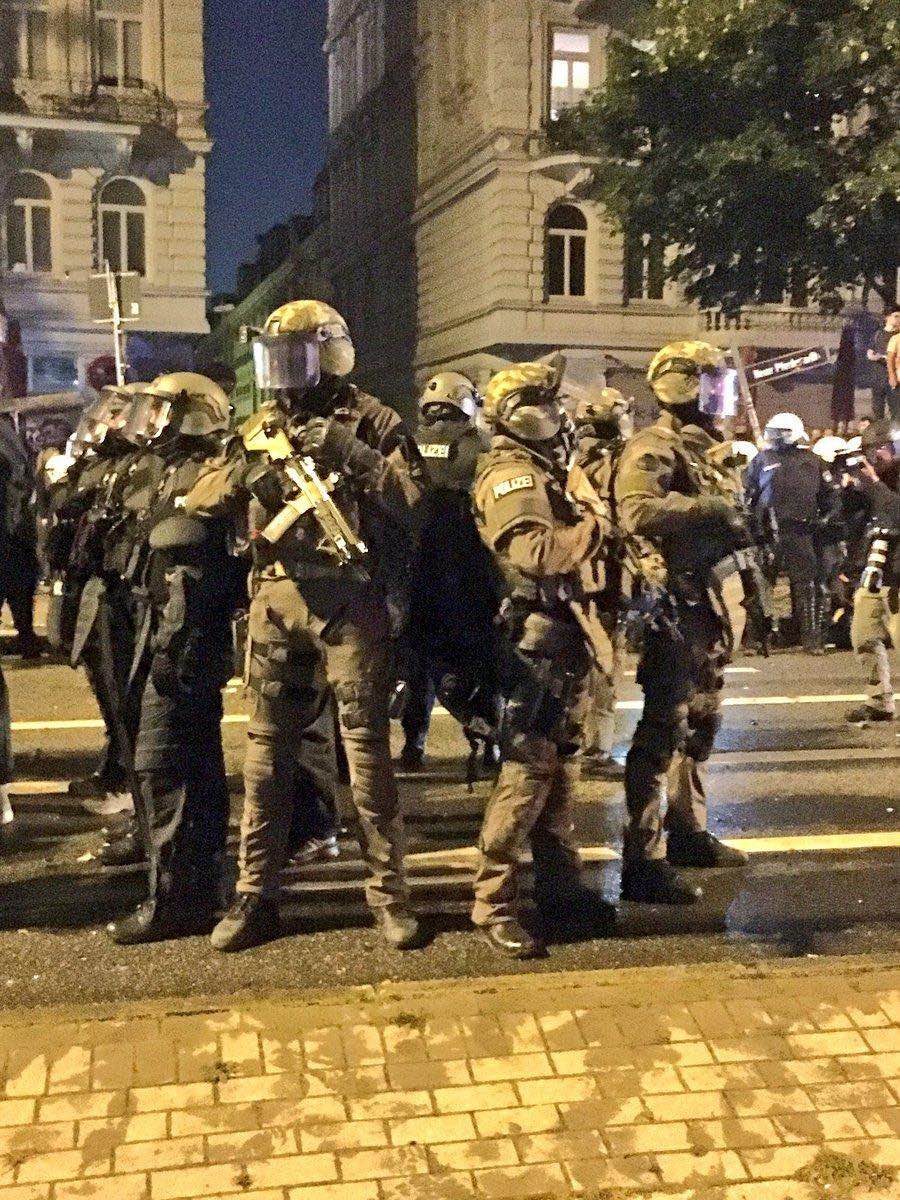
German SWAT police attempting to suppress resistance to the 2017 G20 summit in Hamburg, in order to defend Donald Trump, Vladimir Putin, Xi Jinping, Recep Tayyip Erdoğan, and Saudi Arabian finance minister Muhammad al-Jadaan.

The other lesson that we can draw from German history is that civil war is not the worst thing that can happen. After 1933, there was resistance to fascism in Germany, but the resistance movement was too weak to wage a large-scale struggle like the Ruhr uprising.

By contrast, in countries like Spain and Italy, where the workers’ movement was not dominated by social democrats focused on elections but rather was driven by anarchists and socialists focused on grassroots organizing and action, a long struggle took place against the fascist regimes that came to power, involving extensive resistance.

In the case of Spain, after decades of unauthorized demonstrations, strikes, and militant attacks, the capitalist elite were forced to introduce a democratic system as a concession. The foundation for this extensive resistance had been laid by generations of peasants’ and workers’ resistance from which a great anarchist movement grew, culminating in the anarchist revolution in 1936 and the civil war from 1936 to 1939. Although the anarchists were defeated in the civil war, their efforts left such a mark in Spain that eventually fascism was abolished without the sort of military defeat that was essential to ending fascism in Germany.

To be clear, we do not want a civil war. We want a social revolution—we want people to stand so decisively against the state and capitalism, with such unity, that the other side is too small to wage war at all. But if our only choice is between civil war and a dictatorship that will have a free hand to imprison and murder millions of people, then the decision should be clear. Civil war is better.

Democrats in the United States are trying to stoke fear that “non-peaceful” confrontations with ICE and the Trump regime will lead to the deployment of the military. And then what? People will get shot for protesting? But aren’t people already being shot?

What the Democrats really fear is not that people could be hurt in the streets, but that Democrat politicians might lose their jobs. Because they want to maintain their own power, they try to pacify and divide the resistance with rhetoric about the necessity of remaining “non-violent” and “law-abiding.”

What happens when a population unites against a regime and no longer stops at what is legally permitted? We saw the answer in Germany in 1989 when the GDR (the so-called “German Democratic Republic”) collapsed.

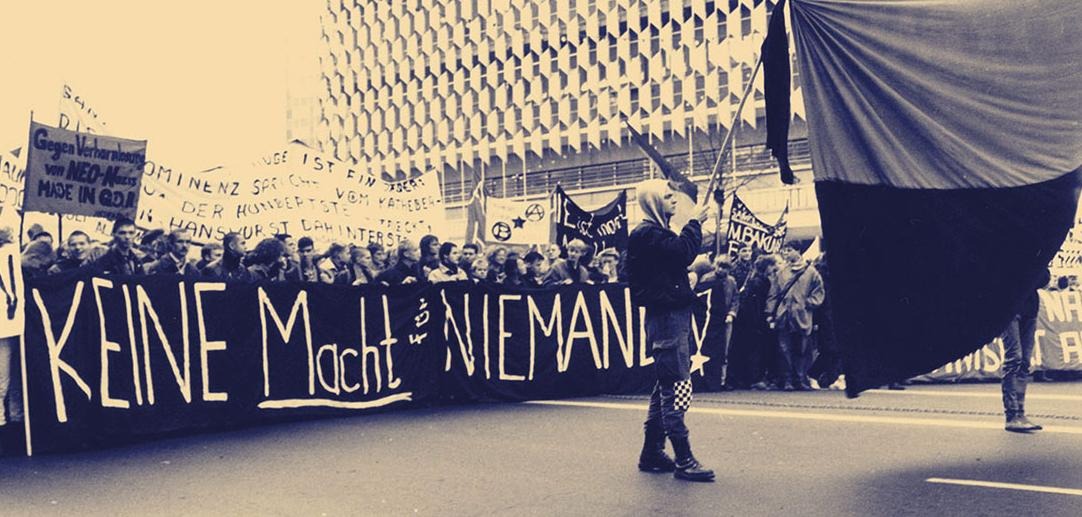
At that time, the resistance to the regime was not all “nonviolent.” There were attacks on the police. The demonstrations were not law-abiding—in fact, they were all illegal. Millions of people broke the law. Because of the number of people on the streets refusing to obey, the regime knew that it would have to use the military, including tanks, the quell the uprising.

“No Power for nobody”: Anarchists participate in the largest demonstration against the GDR Regime in 1989. Anarchists, especially anarcho-punks and eco-activists, played an important role in bringing down the dictatorship.

Parts of the government became afraid of escalation. They were unsure whether their military was ready to obey the order to attack protesters. They asked their main ally—the Soviet Union—to support them with troops. Soviet leader Mikhail Gorbachev refused.

The Trump regime is not dependent on Moscow, at least not in this particular way. But it relies on an American state apparatus that is not entirely under its control.

As long the Trump regime is not forced to use the military and all other available forces, as long as the loyal shock troops of ICE suffice to enable them to accomplish their goals, those who are not yet definitively on Donald Trump’s side will not have to make a decision. They will not have to experience a Gorbachev moment in which they might decide against carrying out Trump’s orders.

Escalation always involves the risk of losing. But holding back in this situation means choosing to lose.

The downfall of the GDR also shows that it is not necessarily useful to address resistance directly to the despot, as he will not be the one who hesitates, but rather to those who are not completely ideologically on his side.

In the context of the United States, this would mean not to focus all energy on ICE and Trump. It is important to oppose them, but that will go much better if every time Democrat politicians send local and state police and National Guard to protect ICE, they experience consequences that make it impossible for them to continue to do so.

The uprising in the GDR did not succeed in a vacuum. In many countries in Eastern Europe, the heads of numerous dictatorships were forced to decide whether to double down on repression or make concessions. Any weakening of the dictatorship in a neighboring country made it possible to expand the fighting elsewhere, because it was no longer possible to move troops from one Warsaw Pact state to another.

We want to propose a question. What would it take to ensure that a mayor in the USA can no longer send the police when people try to confront a hotel full of ICE agents? What has to happen to compel a governor to order his National Guard not to interfere? What circumstances would have to prevail on the street to make it impossible for the National Guard of one state to be sent in another?

It’s Too Late to Preserve the Status Quo

While fascists and autocrats are not yet in power in Germany, the day when they could be is not far away. The AFD (Alternative for Germany) is about to become the strongest party in Germany. The AFD represents positions similar to the MAGA movement, and the demographics that support them are similar.

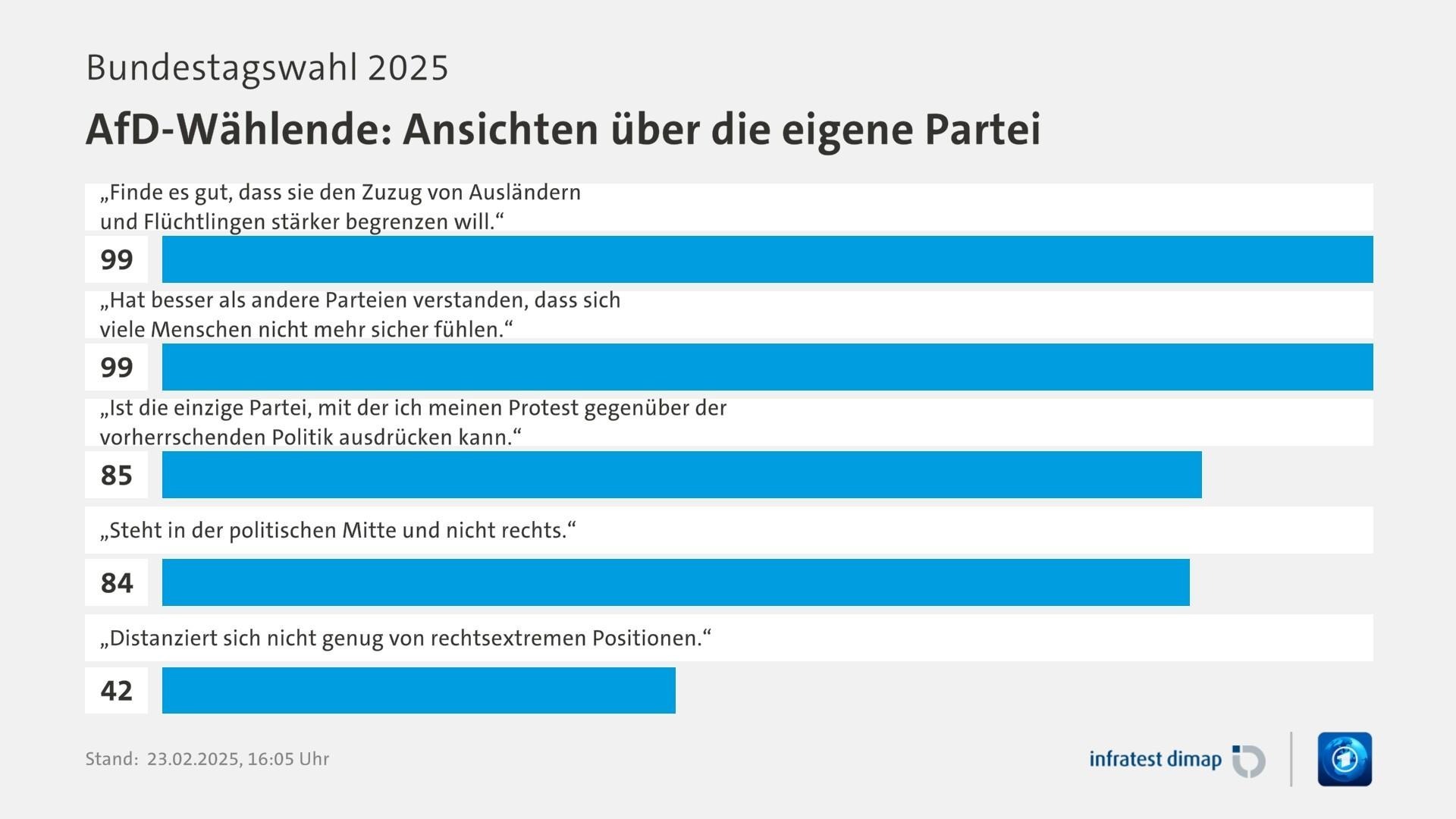
While it has a clearly fascist base, most people do not vote for the AFD because they support its positions. As surveys show, they vote AFD to express their anger at the existing system. Consequently, the AFD is now especially successful in the Ruhr area—the region where the largest anti-fascist uprising in German history took place in 1920—as well as in East Germany. This is not a coincidence. After the people in Ruhr area mined coal for 100 years to support German industry and German wars, the region was left impoverished the way that the Rust Belt in the United States has been since the 1970s.

A survey of AFD voters in February 2025, in which 85% of them claimed that the AFD was the only political party via which they could express their protest.

And who was responsible for this? The SPD—the social democrats who managed the process of economic decline for 50 years while diligently profiting from their posts in the state apparatus until the situation finally became so stark that they could not maintain their majorities.

And here we find another parallel: just like Trump, the AFD does not promise material improvements to its base; rather, it promises hatred and violence. It will not benefit the majority of its constituents. The AFD openly states in its election program that it intends to cut German social spending, just as the Republicans are doing under Trump. Its leaders are primarily recruited from the academic elites; they are not the ones who are at risk from these cuts.

The neoliberal left (SPD) and the conservatives (CDU) who are currently in power in Germany have already partially implemented these cuts on the grounds that doing so would stop the AFD from gaining support. Unsurprisingly, this has done nothing to erode the popularity of the AFD. These neoliberal leftists and conservatives are comparable to the right wing of the US Democrats.

The only other notable political force in Germany is the Left Party, which now represents the new Social Democracy. It’s clear where this will end up. In the neoliberal global order, and due to the decline of the imperialist rule of Europe, the Left Party will not be able to carry out significant social reforms. Like Syriza, it will betray its predominantly young voters—this has already been shown in the decision to abstain from the vote on a pension package, which allowed the law to pass. (At the expense of the younger generations, this pension package preserves the status quo of the state pension without compelling privileged groups—such as Beamte, a special group of state employees, entrepreneurs, and self-employed people such as doctors—to pay into the general pension system.)

To summarize: just as in the United States, where the Democrats do not represent a real alternative to Trump and cannot stop the fundamental causes of authoritarianism, in Germany, there is no real alternative to be found within the state.

The only way out would be a movement that overturns the fundamental power structure of society, putting an end to the state and capitalism. Unfortunately, the prospects for this in Germany are currently very weak.

The Resistance to Trump Is Our Best Hope

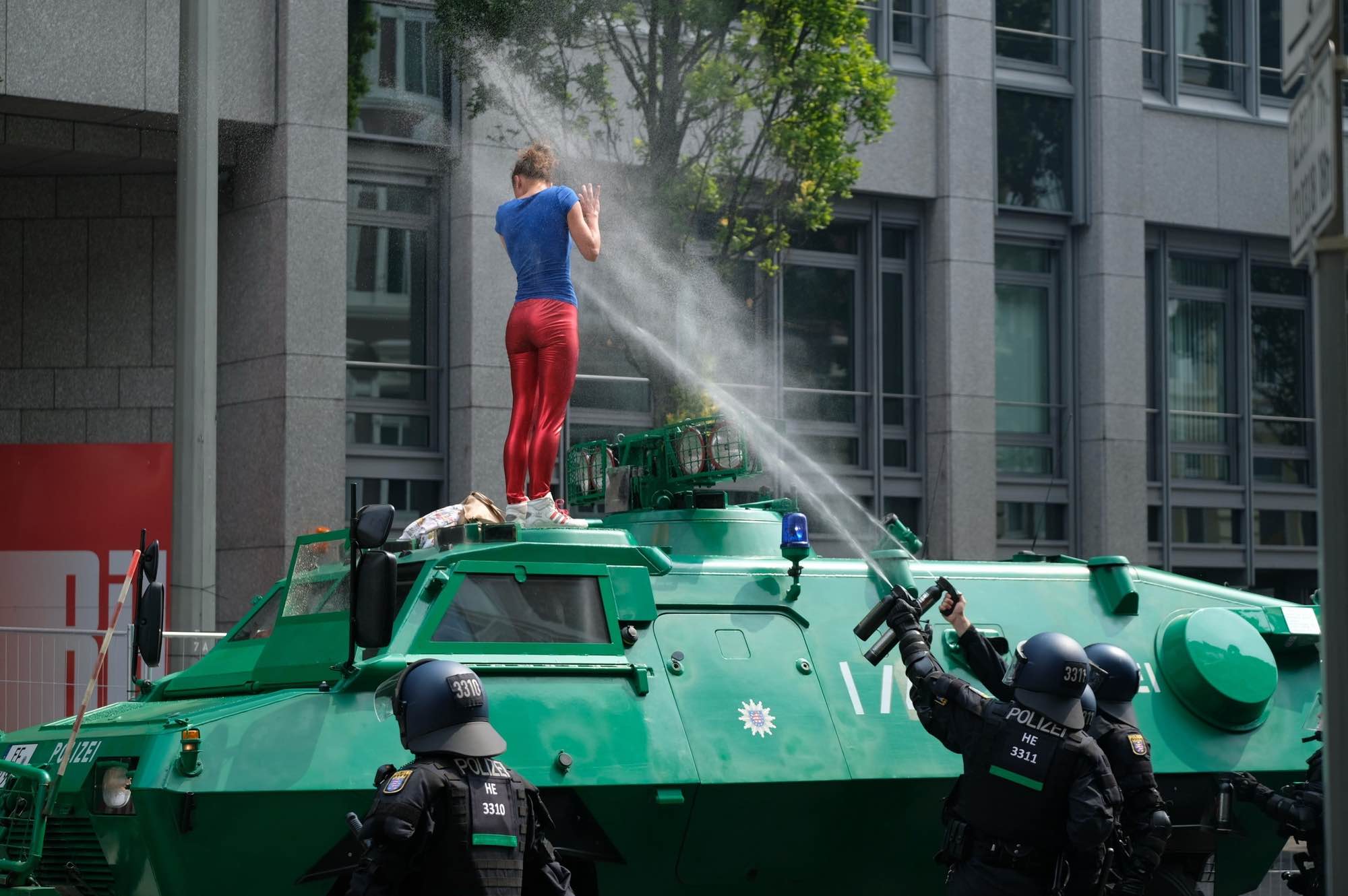
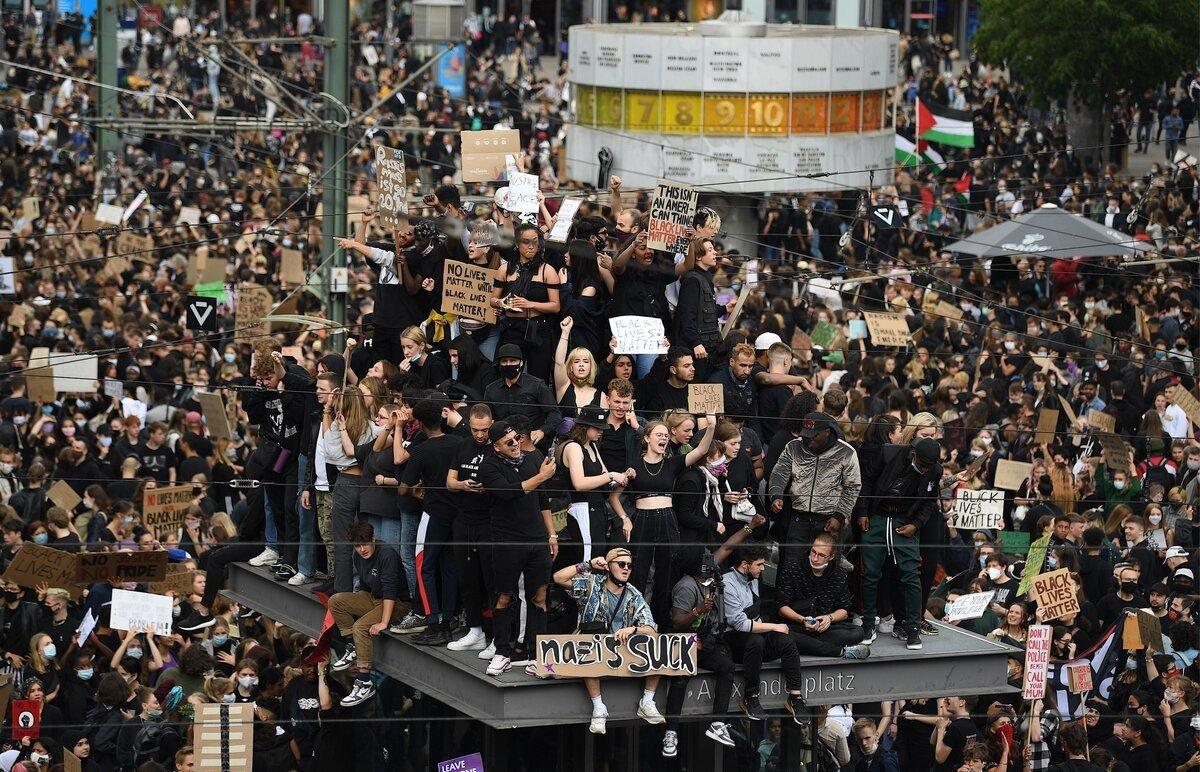
In view of all these factors, we could be reduced to despair, but actually, we are still capable of hope. We are able to hope because we have experienced that what is happening in the United States can spill over to Germany. Inspired by the George Floyd uprising, tens of thousands in Germany spontaneously took to the streets against the violence of the police in the summer of 2020—something that has not happened in Germany for decades, because, thanks to their “good training” see Appendix II, the police rarely kill white people from the middle class. Summer 2020 was one of the few moments in the past decades when, for a moment, something other than the status quo seemed possible.

After that, protests continued against police murders, although—being organized by an alliance of liberals, social democrats, and parts of the so-called “radical left”—they were mostly directed at securing the convictions of the policemen involved. As in the United States, this strategy has failed utterly. Instead of becoming more “accountable,” police are expanding their powers in Germany, including the use of Tasers, AI-based surveillance, and the installation of monitoring software.

But if people in the US succeed in stopping Trump and the resistance that unfolds exceeds the control of Democrat politicians, if something better than the old status quo becomes possible, that will also inspire people in Germany and all around the world.

That is why we want to call on everyone in the territory claimed by Germany to support the resistance against Trump.

The only route that promises long-term security is the route to another world.

15,000 people protest in solidarity with the George Floyd Uprising on June 6, 2020 in Berlin.


Appendix I: A Poster in Memory of Renee Good

After seeing the above photograph of this poster hanging in Germany, we’ve succeeded in acquiring a PDF of it, which you can download here.

Click on the image to download the PDF.


Appendix II: Better-Trained Cops Don’t Stop Killing

In their attempts to pacify resistance to the Trump regime, Democrats promote the narrative that a “better trained” police force would be less violent.

The example of the German police shows that this is false. German police are among the most highly trained in the world. German officers receive two and a half or even three years of training. They receive training in deescalation and communication. This does not prevent them from murdering people.

German police receiving training about racism against Sinti and Romani people.

A well-trained police force does not create more freedom and security. It creates a stronger state. It is precisely this “strong” state that has repeatedly made great horrors possible in German history.

In 2024, police in Germany shot and killed 22 people. For comparison, if the population of Germany were equivalent to the population of the United States, this would mean that German police killed approximately 100 people. In the United States, police kill over 1000 people a year, but the figures in Germany do not include those who have been killed by the police in other ways—there are no central statistics about the total number of police murders in Germany, just as there were no public statistics about police murders in the United States until fierce demonstrations brought the subject to light. Firearms are much harder to come by in Germany, yet the police still kill people, even without that justification.

In any case, despite all the training, the number of people that police shoot in Germany is increasing.

Are police less likely to do violence to people because they are trained to “help” them? Consider the case of a deaf 12-year-old, whom police shot on the night of November 16, 2025. The police were sent by the youth welfare office because the 12-year-old had left a residential group of the youth welfare office to visit her family. Shortly after midnight, several police officers broke into the family’s home, pulled the mother, who was also deaf, out of the apartment, and shot the 12-year-old with both a pistol and a Taser. The child survived, though critically injured. The police claim that the 12-year-old had a knife in her hand. If she really did have a knife in her hand, it was a spontaneous attempt to defend her family against the violence of the state.

The reasoning of the police for the operation was that the twelve-year-old urgently needed insulin and therefore had to intervene. The logic is that the state must protect people from themselves by force, must violently rule them for their own good. Training is not the issue here. The problem is the monopolization of force by an institution that exists for the sake of using violence against the general public.

The entrance to the apartment building where German police shot a 12-year-old girl on November 16, 2025. It is located in Hamme, a working class neighborhood in the town of Bochum in the Ruhr Area.

Read the whole story
rocketo
3 days ago
reply
“In the long term, it’s better not to compromise, not to let oneself be pacified and disarmed, whether literally or figuratively. Being uncompromising and taking risks is often safer than restoring the status quo.”
seattle, wa
Share this story
Delete
Next Page of Stories