Throughout pop history, queer music has often been written about in ways that obscured, or even muted, its queerness. The crux of the problem is structural—since the invention of the rock critic in the 1960s, straight white men have dominated the cultural conversation, whether by having access to the most resources or simply by being louder than everyone else. Though voices who don’t fit into the Lester Bangs mold have always made space for ourselves, the broader landscape only really began opening up in the mid 2000s, with the advent of blogs and then social media. Still, the old dynamic tends to replicate itself even now—some of the best resourced and most popular music podcasts, for instance, are almost exclusively hosted by straight white men. (For the record, ours is not!)
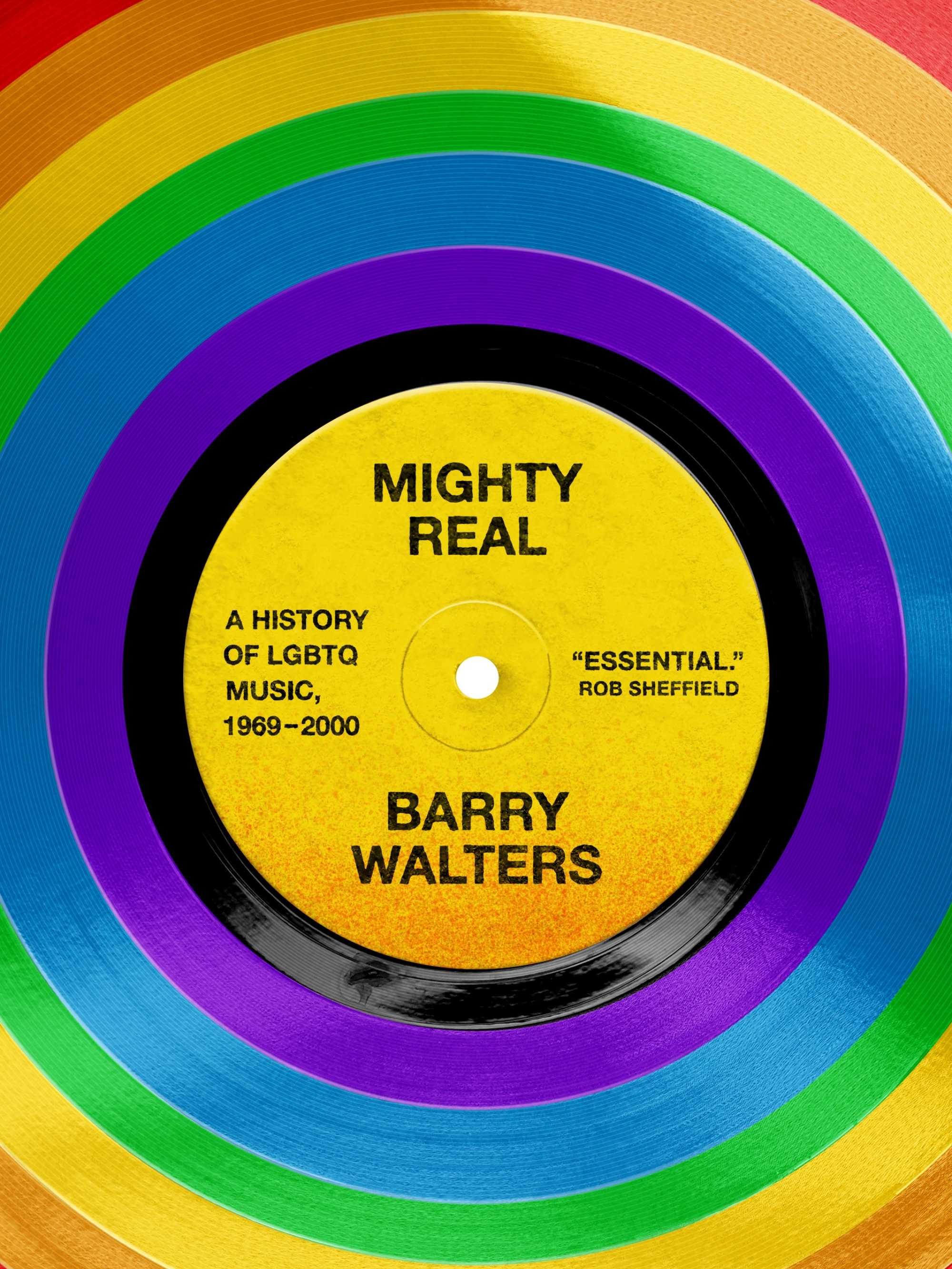
All of this is to say: Music lovers have missed out on a lot of rich, dynamic history because of the homogeneity of rock criticism. It’s a fact I kept thinking about while reading Mighty Real: A History of LGBTQ Music, 1969-2000 by the gay music critic Barry Walters, who began his storied career at the Village Voice in the early 1980s. “LGBTQ musicians have made an art out of saying what can’t be overtly said,” Walters writes in the book’s intro, “just as LGBTQ listeners have learned to hear what others can’t.” In his massively instructive, entertaining, and insightful tome, the veteran journalist offers a much-needed corrective on how the queer canon of artists has been framed—and, in certain cases, denigrated—by the industry, politicians, the public, and critics (whose dismissive and sometimes homophobic reviews are quoted liberally—tea). Mighty Real is not a polemic, but the book’s dedication to depicting LGBTQ and allied musicians through the lens of queer history is exhilarating, an underline on the new ways even the most-written-about pop icons can be thought about even now. (Full disclosure: Music journalism is a small cohort—practically everyone seems to run into one another, if you’ve been around long enough—and Walters recently edited a few blurbs of mine for a freelance assignment, though we do not know each other well.)
Mighty Real begins with the Velvet Underground, just before 1969’s Stonewall rebellion, and immediately establishes itself as expansive and exciting. Though more has been written about Lou Reed over the last several decades than we know what to do with—or will ever need (sorry not sorry)—the breeziness, enthusiasm, and close reading with which Walters addresses Reed’s lyrical expressions of his queerness immediately woke me up. On “Sister Ray,” Walters writes: “Back then, detailing intravenous drug use with first-person pronouns in an oft-repeated refrain was one thing. But the similarly repeated line, ‘She’s busy sucking on my ding-dong’ is even now a humdinger, particularly since ‘she’ most likely has one herself. When the cops arrive, Reed can’t be bothered—he’s focused on his fix and fellatio.”
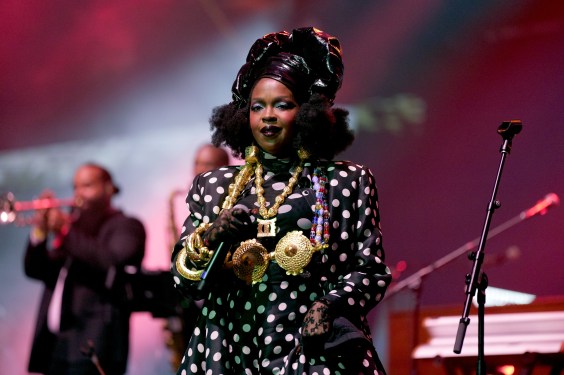
After breaking out in a huge way with Fugees' The Score in 1996, Lauryn Hill took over the world with her 1998 solo debut The Miseducation Of Lauryn Hill, then never put out another studio album. Over the weekend, Hill joined in some discourse about why things played out that way.
“I was like a Harriet Tubman figure in some respects running to speak difficult truths to power before certain forces tried to close those doors. If it was so easy to do, where is that expression now on the world stage? Systems fear what they can’t control. Creativity is most potent when it’s free.”
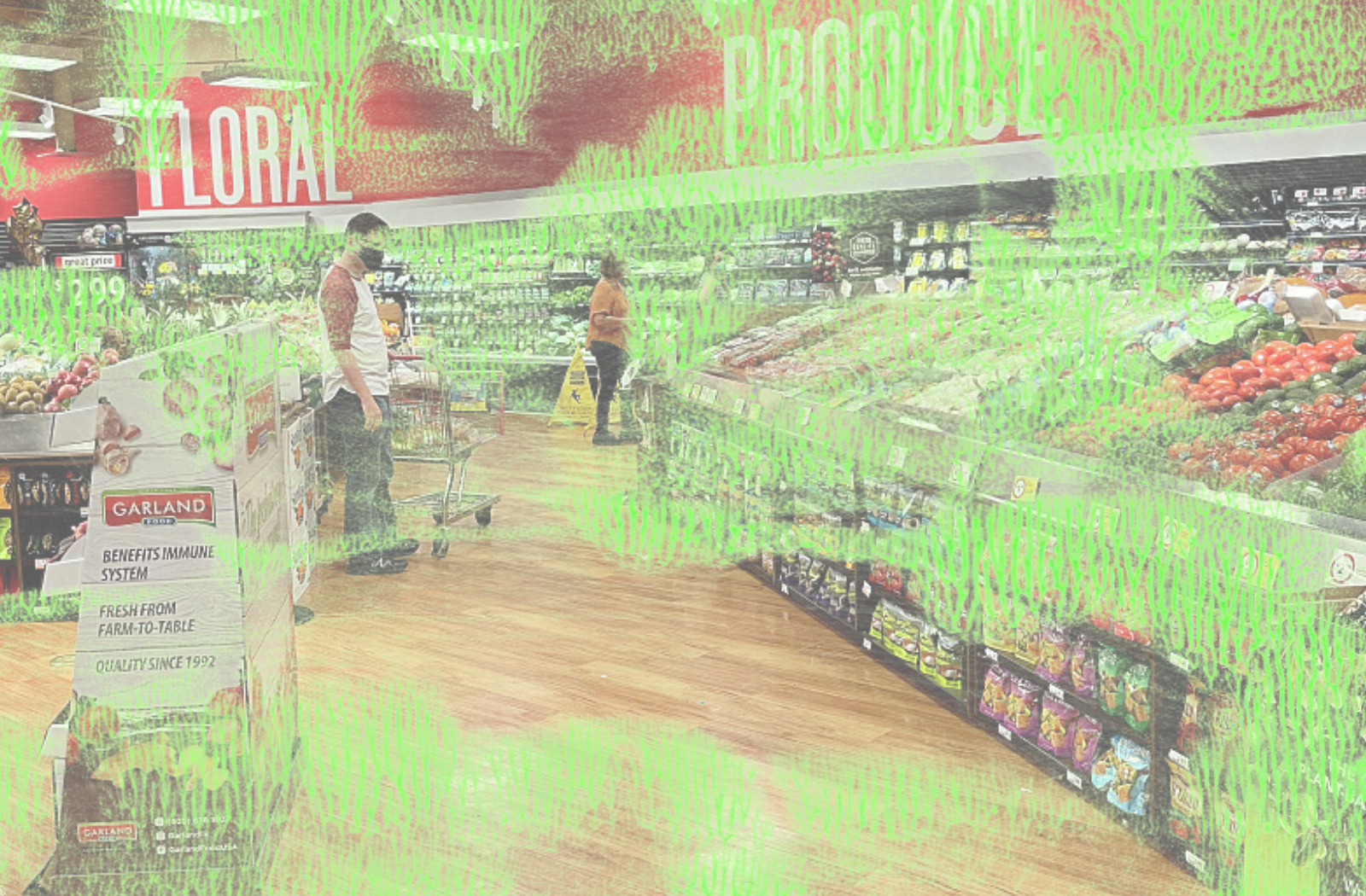
I am a wanderer. A peruser. A person who loves nothing more than to look at a bunch of stuff and think to myself “huh, that’s interesting.” This predilection leads me to many a dusty antique mall, poring over the junk of the deceased, but also offers a much more mundane form of entertainment every time I visit the supermarket. Whether I needed an entire pantry restock or just a few necessities, the grocery store was always there, offering me the opportunity for a little exploratory wonder.
But it’s starting to feel like the thrill of wandering down the aisles is fading. Where I once relished the opportunity to spend an hour — or hell, two — browsing the aisles and tediously reading the labels on every can of soup, fueled by the hazy energy of a sativa cannabis gummy. Now, though, I now feel more like a contestant on Supermarket Sweep, making a mad dash to grab my yogurt and potato chips instead of luxuriating in the experience. When I finally realized this on a recent trip for milk and eggs, it was a total bummer, and I haven’t been able to stop thinking about why the grocery store sucks now.
“What’s happening at the supermarket right now feels a lot like what’s happening on the internet right now. We have more stuff than we’ve ever had before, but none of us actually want what we can get, and your Instagram feed full of ads and other garbage is proof of that shift.”
Jane Don’t is Seattle’s latest star to compete on RuPaul’s Drag Race. If you’ve seen her locally, you already know she was poised to do well. Her drag style uses vintage aesthetics in contemporary ways, combining her knowledge of queer history, fashion references, and her own innovative sewing skills. With a fully glamorous mug, she delivers high-camp performances full of witty pop-culture and classic diva references. Her talents especially come out when she’s handed a microphone to show off her seemingly effortless grasp on comedy. On the show, that skill in particular led her to high praise from comedy giants such as special guest judges Sarah Sherman and Atsuko Okatsuka. If you haven’t gathered yet, she absolutely crushed it, right up until a shocking elimination in the top 5 of Season 18. She made a record-smashing run of high placements, and claimed the title of Miss Congeniality during the finale. Jane Don’t truly made Seattle proud, and proved to the world she is one of the best in the business.
I sat down with her to chat through her origin story, her experience on the show, and to hear about what’s coming next in her continuing success—including her one-woman show, Don’t Does America,which kicks off in Seattle on September 1.
For anyone who has never seen your drag, how would you describe yourself and what you do? I’m 33. I’m a Pisces with a Capricorn moon and Capricorn rising. I’m a drag artist and a loud woman living in Seattle. My drag is informed by comedy, glamour, and subculture. Those three elements are always present. I’m very inspired by vintage comedians and funny women. Joan Rivers, Goldie Hawn, Bette Midler, obviously. I’m also super interested and informed by the history of drag and the history of the underground. I try to combine a comedic sensibility with a subversive approach to fashion and the work that I make.
Where did you get your start in drag? What was the origin story? I was really interested in drag for a long time. In high school, I used to go to this 24-hour diner in Spokane called the Satellite. It was right next to one of the two gay clubs in town that had a drag show. We would go around midnight and have dinner and then all the girls after the show would shuffle in and sit at the bar. I think from that point on I was just very intrigued by drag. I also started watching Drag Race in high school. Then I organized my college’s drag show and would go to shows in Tacoma.
When I moved to Seattle I didn’t really have a lot of friends. I would go to shows at Kremwerk all the time. The first Seattle drag show I ever saw was at Chop Suey. It was 2015, right when I had moved to the Hill. All the gals were there. I remember seeing Cucci and Natalie Portal perform, and the drag that I’d been familiar with up to that point had been sort of traditional. I remember being blown away by what they were doing. I think that sort of broke my brain open a little bit.
I started going to shows, and then after a while I wanted to hang out with the drag queens, and you can’t go in the dressing room unless you have a wig on. I would see stuff and be like “I could do that.” So after a couple years, I started doing my makeup secretly in my bathroom.
What was your first real gig like? My very first number was at Kremwerk with Cookie Couture. I played backup on a fake piano behind her to Gilda Radner’s “Let’s Talk Dirty to the Animals.” Then my first real gig was Queen for Queen at Pony for Pride of 2019. I did an Amanda Lepore song, “Turn Me Over,” dressed as bacon, and Monday Mourning was the sexy chef who was slapping me with the spatula. An auspicious beginning.
“People can say you shouldn’t need external validation, but I’m not medicated enough to feel like that, babe.”
What were some of the struggles you faced? When I started drag, I kind of had to do my own thing. One of the reasons I started hosting so quickly was because it didn’t really feel like people were booking me. It didn’t feel like people were sort of crazy about me, but I knew how to walk into a bar and ask to put on a drag show. So there’s been an ongoing struggle of trying to balance my love, allegiance, and gratitude to the Seattle scene for raising me with my own ambition. Honestly, I don’t think that Seattle is overly fond of people who are outwardly ambitious.
Also, there were just the difficulties of being a broke person trying to make art in this city that’s so hostile to broke people. I’ve lost count of the amount of times that I thought about getting a day job or going back to school or going to hair school. There were moments where I felt very alone or I felt like the scene didn’t necessarily see it for me, but I’m still profoundly grateful to it. So many of the people here are a huge part of the reason that I got to the point where I could get on Drag Race. So much of my time on Drag Race, I thought, “thank god I’m from Seattle, and thank god I have the references and the experiences that I have, and that I come from the sort of place artistically that I do.” I just think there’s something singular about drag here. I think it’s why Seattle girls always seem to do really well on the show.
Was there anyone specifically who inspired you or kept you going? I’m very much a drag queen’s drag queen. The sisters and the family that I’ve found here are always one of the biggest motivating factors to me. Shout out to Rowan Ruthless, who was there the first night that I performed in drag, and Natalie Portal has always like been a huge part of it. Irene the Alien and Bosco, obviously. I think when the three of us kind of became friends, it gave me a sense that I was on the right path.
Once you got the call for RuPaul’s Drag Race, how did it feel? Well, the funny thing is, in the interest of transparency, there was never a point in getting the call and getting to the show where I was overly surprised that I was there. I sent my tape in and my brain went, “okay, you’re on Drag Race.” I had started preparing even before I got a phone call. I started commissioning things, getting hair, planning, writing jokes, and mentally preparing as though I’m going to be there. The thing that was hard to compute was how well I was doing.
That confidence and preparation served you well! It was clear you were so prepared for this moment. What were you most proud of during your time on the show? I’m really proud of the whole body of work that I presented. I had been thinking about it for a long time, I knew my shit, and I had done the work. One of the big lessons Drag Race teaches you is to do what you know. It’s a great showbiz lesson, right? I think that’s something I figured out really early on and that worked to my benefit. I went into everything with the mindset of I’m a comedian, so every challenge is a comedy challenge. It doesn’t matter what the challenge is. Like for the girl group, I’m not a dancer, so rather than try to be that, I was a comedian.
That sense of humor carried through in your out-of-drag moments. How did it feel to be your out-of-drag self on TV? That was honestly the most nerve-wracking thing. There’s a lot of pieces of myself that go into Jane that are parts of myself that I don’t love. How talkative I am, how loud I am, you know, I can be sort of obnoxious. I don’t love those things about myself, but those are things that are real assets in drag. I think that’s psychologically good and helpful.
But Drag Race asks you to do something that you’re never really asked to do as a performer in any other context, which is being “on” both in character and out of character. It was funny to watch the fan response because people didn’t understand why I was boisterous in drag and then out of drag I’m kind of dry and sardonic. I’m not a person who’s a character out of drag. I spent a lot of time using drag in a way that’s positive for my mental health and well-being by funneling those attributes into it, but then you get on Drag Race and you’re on TV more out of drag than you are in drag. So that was a struggle at points. I think it’s also okay that we don’t expect performers to be “on” all the time.
Can you tell me a little bit more about what the process of filming was like? I just always try to impress on everybody how fucking hard the show is. People have said it before, but when they say “Drag Race,” it’s really a race! It’s long days of filming. There’s so many times on camera where I’m looking at all of our skin just being like “oh my god, we look like angry little preemies.” We just looked like sad, underbaked breads. Drag is so impactful on your body and to be doing it over and over again in such quick succession is so tiring. Then on top of that you have the stress of eliminations and constantly having to generate. I have the utmost respect for anybody who’s gone through it because it really is an endurance test as much as it is a test of skill.
It’s also incredibly fun. I wouldn’t trade it for anything. The relationships that you form with people—you’re there for a week with these girls and all of a sudden you’re best friends.
You said in episode one you wanted America to know you’re one of the best in the business. Do you feel you achieved that? I knew I was going to do well. I didn’t know that I was going to do as well as I did. I didn’t think it was an option. I mean, nobody, with all due respect, has ever been in the top for 10 straight weeks. I didn’t know that was a thing that they would let happen.
I really really really wanted to win very badly, but more than that, I wanted to show people—and I wanted to show myself—that I really am very good at this; that I’m as good as I think I am. People can say you shouldn’t need external validation, but I’m not medicated enough to feel like that, babe. I need external validation. So I feel a level of peace in my elimination because I ultimately did what I set out to do. The money would have been lovely, but as far as that goal, I did show people that I am.
What is next for you? How can people support you? I’m doing a one-woman show tour, Don’t Does America. It’s basically like the whole country. That’ll be in September. Come out and see that. That’s the work that’s closest to my heart, so please come see that. I would love to meet people. I have a lot of work that’s coming out that will exist long past the show. The reality is like I’m a lifer. I have no other skills. It’s cross-dressing or the soup kitchen.
Anything else you want to say, any parting words? I guess I would say I hope Donald Trump dies soon. And you can put that in writing.
After becoming a European destination for adventurous music fans over the course of this century, C2C made its New York City debut last year. The one-day event held a lot of promise but was not without its flaws. As I wrote in my review at the time, the lineup, which historically focuses on electronic music’s bleeding edge, was uneven. And the setup at Knockdown Center in Ridgewood, Queens was less than ideal, including a too-small stage area that was constantly overcrowded. “If C2C returns to Knockdown at some point,” I nudged, “perhaps they could set up the second stage outside, in the venue’s Ruins area, so that people could enjoy more of the night’s music and maybe even have some space to dance to it.”
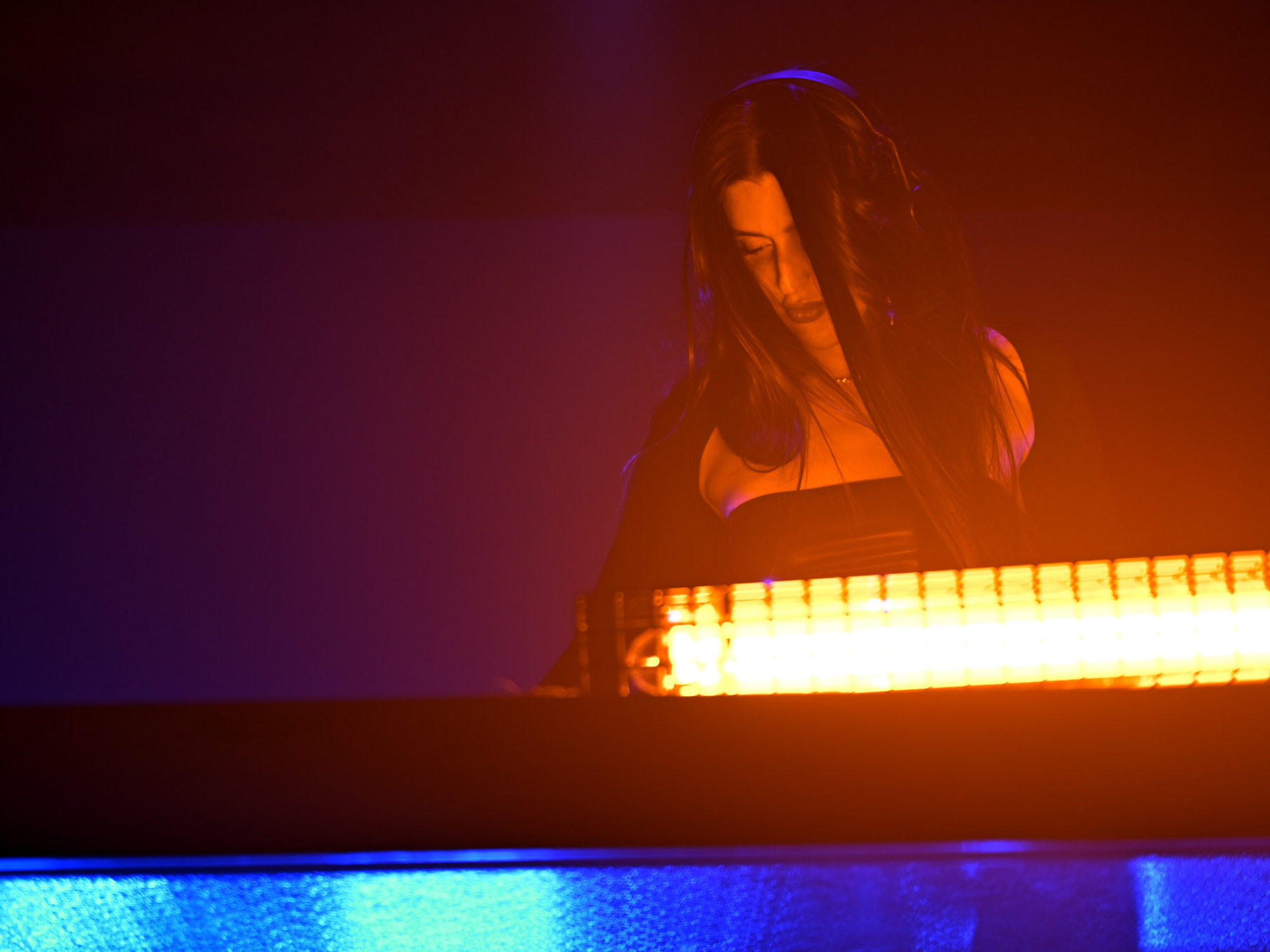
Apparently I was not alone in this critique, because that’s pretty much what C2C did when it came back to Knockdown Center last weekend. Now spread across three stages, including the spacious outdoor one, C2C NYC’s second iteration was a masterclass in troubleshooting. The lineup was much improved. The mood was more energetic. There was some space to breathe. Last year, C2C NYC was an intriguing experiment; this year, it became an unmissable event.
Free trial offer
Get access to everything we do at Hearing Things—including weekly album and song recommendations along with our ever-growing archive of interviews and reports—with a free 30-day trial!
Friday, the Club 2 Club Festival returned to New York for a second consecutive year. Founded in Turin in 2002, the music fest ventured into North America with a one-day event at Knockdown Center in Queens last spring, reprised this year at the same venue ahead of the 25th anniversary edition of C2C’s flagship Italian event this fall.
 Log in